Last updated on February 26, 2026
Burnout doesn't announce itself. It builds quietly in the background while managers focus on deadlines and deliverables. By the time you notice someone's checked out, they've already mentally quit.
The numbers back this up: 44% of US employees report feeling burned out at work. And the cost? Somewhere between $4,000 and $21,000 per employee annually in lost productivity and turnover costs (depending on their level).
I tested the main categories of burnout detection software to see which ones actually help you spot the warning signs before your best people walk out the door.
Watch the full breakdown of these tools in action.
Activity Trackers Measure Work Intensity (But at What Cost?)
Activity monitoring software tries to catch burnout by tracking how hard people are working. These tools log screen time, typing patterns, mouse movement, URL usage, idle time, and (in some cases) screenshots.
Three platforms dominate this space:
ActivTrak offers basic monitoring with productivity visibility. It tracks activity automatically through a clean dashboard and stays less invasive than keystroke-heavy alternatives. They have a free plan with limited features, plus paid tiers from $10 to $19 per user monthly.
Teramind goes deep on security monitoring. We're talking employee screenshots, keystroke logging, and advanced insider threat detection. Most teams will find this level of surveillance excessive, and implementation takes longer. But if you're in a security-sensitive industry, this might be necessary. (Just know what you're signing up for.)
WebWork targets remote and hybrid teams with optional screenshots, real-time presence tracking, and payroll integrations. It's designed to feel lighter than full surveillance, starting at $4.99 monthly. But it's still activity tracking, which means it can create performance pressure if you're not careful about how you use it.
The Problem With Watching Everything
Here's the thing about activity trackers: employees find them invasive. And the data supports their concerns.
The Wall Street Journal cited a survey where 41% of professionals said employer monitoring made them feel less productive. When people know they're being watched, they optimize for looking busy instead of actually doing good work.
Activity trackers also measure the wrong thing. They tell you when someone's overworked, but they don't tell you anything about their recovery level or whether they're actually heading toward burnout.
PTO Data Reveals Burnout Risk Without the Surveillance
A different approach uses time-off patterns to predict burnout before it happens. Instead of monitoring every keystroke, these tools look at whether people are actually taking breaks and recovering.
Hubstaff uses AI-powered analytics to track productivity trends like high activity levels or skipped breaks. This lets managers intervene early when someone's working too hard. Pricing starts at $4.99 per user monthly and scales based on features.
The limitation? It focuses on overwork, not recovery. You'll know someone's putting in long hours, but you won't know if they're close to breaking.
PTO Genius automates PTO tracking and uses AI to flag potential burnout risks based on time-off patterns. It sends proactive reminders to take leave. But it might be overbuilt for smaller teams that just want simple adoption.
Vacation Tracker's Recharge Feature Predicts Burnout Before It Happens
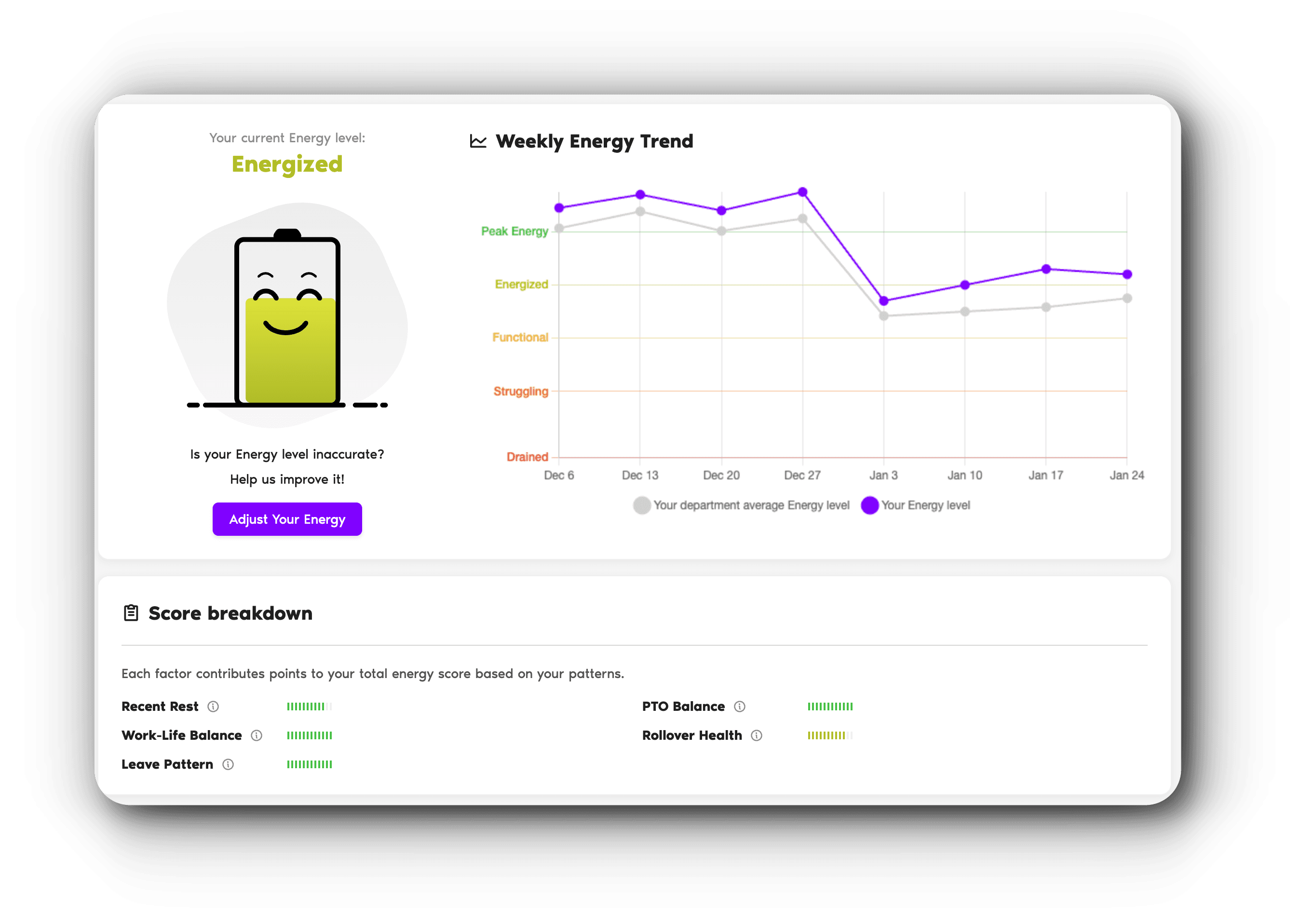
Vacation Tracker takes a different angle. The platform is built for PTO management, but the new Recharge feature tracks employee energy levels based on time-off patterns and compares them to department averages.
You can manually adjust energy scores if the automatic calculation feels off. And the AI-powered suggestion tool helps employees find optimal dates to request time off based on company holidays, leave policies, and their personal recharge preferences.
This approach keeps teams running smoothly without invasive monitoring. Recovery becomes part of the work cycle instead of just a reward you get if you survive long enough.
Vacation Tracker offers a free version for testing, plus paid plans (Core and Complete) at $4 per user monthly.
Burnout Prevention Is a Visibility Problem
The human layer (manager training and coaching) builds better leadership. Activity tracking measures work intensity. But PTO tracking gives you the first real opportunity to proactively address burnout before it costs you people.
If you want to see how Recharge turns PTO tracking into an early warning system, check out Vacation Tracker and test the Recharge feature with your team.

Annika Helendi
Annika is a fan of marketing and AI.