Last updated on January 23, 2026
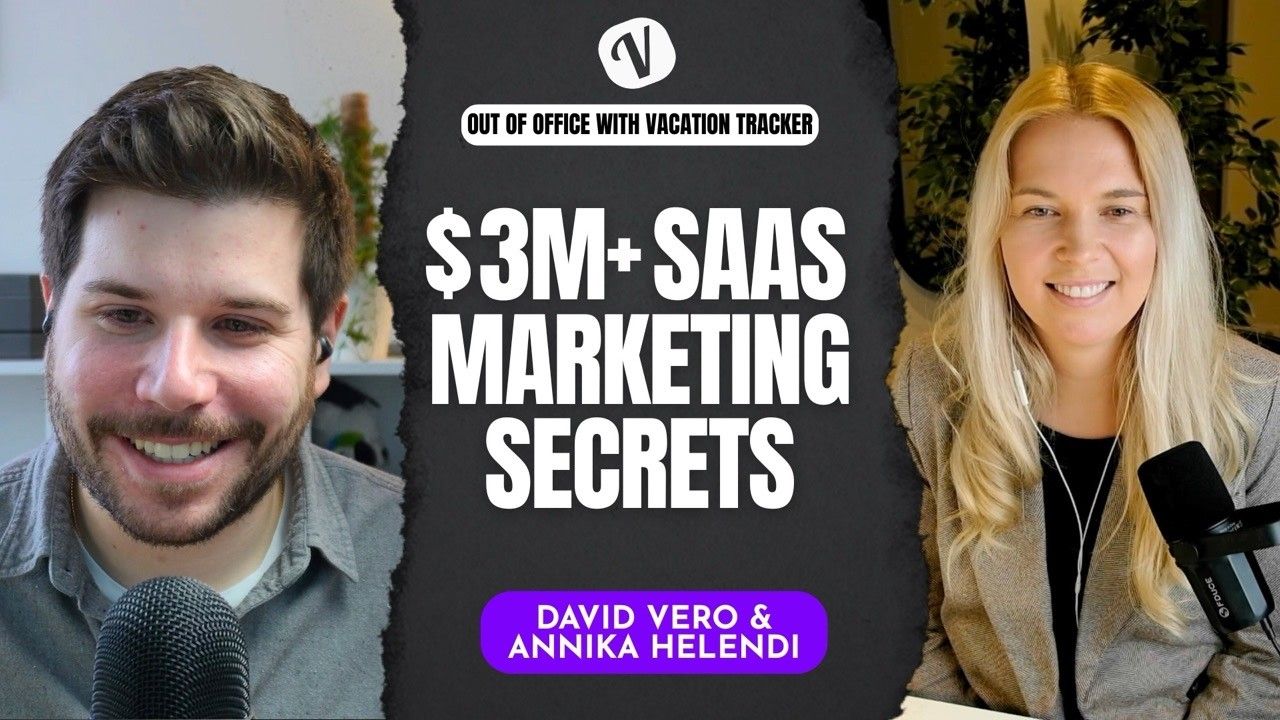
David Vero and Annika Helendi from Vacation Tracker discuss the future of B2B SaaS marketing, the shift from traditional SEO and paid ads to a video-first strategy, and how AI is changing everything.
Watch the full conversation on YouTube to see how we're approaching marketing in 2026:
Traditional SEO Tools Are Obsolete
Annika: "I haven't touched Ahrefs or any SEO keyword tools in months. The old SEO playbook is totally dead. We used to obsess over keyword research, topical authority, and getting that first position in Google. You could mathematically calculate: if we rank first for this term with X searches, we'll get Y clicks at Z conversion rate.
That certainty is gone. AI search has killed it."
David: "Google Analytics? I barely check it anymore. Since the shift from Universal Analytics to GA4, the data became unreliable. Direct traffic and unassigned sources now make up such a huge chunk that you can't make decisions based on it. The tracking just isn't there anymore."
How We Actually Track What Works
We ask users directly in the signup flow: Where did you find out about Vacation Tracker? Then we added a second step asking for context. If someone says they saw a video, we ask which platform. If they came from AI search, they often paste the actual query they used.
This self-reported data is way more valuable than any analytics tool. Yeah, people sometimes just say 'YouTube' without specifying which video (which drives us crazy), but at least we know video is working.
Why We Went All-In on Video
Two years ago, David noticed Calendly had these simple tutorial videos. He thought: I can do this. When we need to use a product or fix something at home, the first thing we do is search for a video. It just made sense to have videos covering everything in our product.
David started creating tutorial videos. Then he bought camera equipment, learned lighting techniques. It never ended. Now we're video-first for everything.
The results came fast when we focused on bottom-of-the-funnel. Within two months, we saw AI search signups attributing themselves to our videos. Compare that to traditional SEO where you're waiting six months minimum to see any traction.
AI Search Wants Fresh Video Content
Here's what Annika has noticed: AI search really wants fresh content. The exact topics we publish videos about start appearing in AI search results almost immediately. Much faster than old-school SEO ever worked.
We're not getting massive YouTube view counts. That's not the point. The videos are feeding AI search engines, and that's where people are finding us. When users report 'AI search' as their source, they're often copying the exact query they used, which gives us incredible insight.
We're Translating Videos with Perfect Lip Sync
One experiment we're running: using HeyGen's API to translate our videos to Spanish and French with perfect lip sync. We have separate YouTube channels for each language, plus blog posts repurposed from the video transcripts.
It's creepy seeing yourself speak a language you don't know fluently. Attribution is murky, but the effort is minimal since we're already creating the original videos. We'll keep going for a few months and see what happens.
Meta and LinkedIn Ads: A Waste of Money
At least in B2B. If anyone's claiming success with Meta ads in B2B, show me the proof (David). We got leads, sure, but they were garbage leads that didn't convert to paid customers.
LinkedIn ads? Everything's slow. You run an ad for two weeks and get nothing. Then maybe after four weeks, you start seeing data from those first two weeks. For an ad platform, that's painfully slow compared to Google or Meta.
The cost doesn't justify the results. We'd rather put that budget into content.
Our Strategy: Dominate Google's First Page
We want to own every touchpoint. If you search for 'best PTO tracker,' you'll see our blog article, our ads, our video, our images in Google Images, our infographics. It's tough to escape us.
This multi-channel domination is why the video strategy worked so fast. We weren't starting from scratch. We had the foundation, then added videos on top.
If you're a more mature company, you should focus on content strategy over ads. Early-stage companies validating their idea? Sure, run some ads. But once you're established, content is where you build your moat.
Bottom-of-the-Funnel Content Is All That Matters
With AI, top-of-the-funnel content is basically dead. AI steals those searches and shows the answer directly. There's no incentive to create that content anymore.
We're hyper-focused on bottom-of-the-funnel and will be more focused on niche tutorials in the future. Not so much on high-volume searches like 'best vacation tracker for remote teams,' but specific niche queries like 'how to integrate vacation tracker with Rippling using Zapier.' Step-by-step problem solving.
We might reach fewer people, but the conversion rates will be way better. We're capturing a more mature ICP, probably bigger companies with higher value.
The Biggest Difference from Five Years Ago
Five years ago, David worked in traditional office environments where everything was rigid and structural. You had your tasks. If you wanted to try something new, you went through red tape and maybe got approval.
Now it's freeform. Companies (hopefully) trust their employees. Here's your project, get it done by X date, how you get there is up to you. More ownership of your schedule. Start early, finish late, take an extra 15 minutes for lunch - as long as the work gets done.
Working remotely for over 10 years "ruined" Annika. She can't go back. It's not just about working from home (she actually prefers co-working spaces). It's that remote companies force a culture of trust and self-starters. Goals matter more than hours.
Why Product Marketing Matters Now
David is transitioning into product marketing because we're finally at that stage. Early on, you just need signups. You need to survive. Once you're more stable, you can focus on growth and optimization.
Too many companies have marketing and product completely separated. Marketing's job ends at signup. When product needs copy or improvements, they ask marketing, but marketing isn't incentivized to make it truly great.
If you're PLG (product-led growth), product marketing should be fully invested in the product, working alongside the product team. That's what drives revenue. It's crazy when companies don't prioritize this.
The Worst Thing for a Marketer
A bad boss is rough. But a bad product without market fit? That's the worst. Annika and David both have seen it in consulting work where companies expect marketers to fix fundamental product problems. You can't market your way out of a product that doesn't work.
When they joined Vacation Tracker, they were relieved to see the product actually works. Super low churn. Natural search volume. It fit their skills perfectly. That foundation matters more than any marketing tactic.
What We're Hiring For
We're currently looking for a content marketer who's video-first, basically a YouTube channel manager. Someone who can create videos and repurpose them across channels.
Since we're now hiring and it's only two of us right now, we want to build a really cool killer team. People who enjoy each other and help each other. And we dream to see explosive growth by the end of the year.
If you're interested, get in touch with us. We're planning another hiring round in spring, role TBD based on what we learn from this first hire.
The Biggest Risk to Our Growth
Playing it too safe. New competitors come out of the woodwork every day. With vibe coding, anyone can throw together a competing product. If we don't take risks, we'll just erode away.
Video gives us a competitive moat, but not everyone's comfortable on camera. That difficulty actually works in our favor. The barrier to entry protects us from competitors who aren't willing to commit to this medium.
Marketing in 2026 Requires Embracing Ambiguity
SEO used to be concrete. You could measure everything precisely. Now with AI search, it's ambiguous. We're doing a bunch of stuff and nobody really knows exactly what's working.
Future marketers need to be okay with that ambiguity. The playbook is gone. Anyone claiming they have a definite answer is lying. We have the luxury of experimenting because we're in-house, not dealing with clients demanding certainty.
That's actually a privilege of working in-house right now. Clients want the playbook that's definitely going to work. But that playbook doesn't exist anymore. We can try different things, go a bit crazy, and see what sticks.

Annika Helendi
Annika is a fan of marketing and AI.