Last updated on January 5, 2026
Remote work solved the commute problem, but it created a new one: tracking who's actually working when everyone's in different time zones. You can't just glance across the office anymore. You need systems that handle asynchronous schedules, global holidays, and digital approvals without turning into a bureaucratic nightmare.
I tested seven leave management systems built specifically for distributed teams. Here's what actually works.
Watch the full breakdown above to see these tools in action.
Why Remote Teams Need Different Leave Tracking Tools
Traditional leave management systems assume everyone works in the same building, follows the same holidays, and submits paper forms. Remote teams operate differently. Your developers might be in Portugal while your designers work from Mexico. Someone's always asleep when someone else needs approval.
You need tools that handle this reality. That means Slack or Teams integration (because that's where remote teams actually communicate), global holiday calendars, and approval workflows that don't require everyone to be online simultaneously.
Vacation Tracker Solves the Core Problem Without Extra Complexity
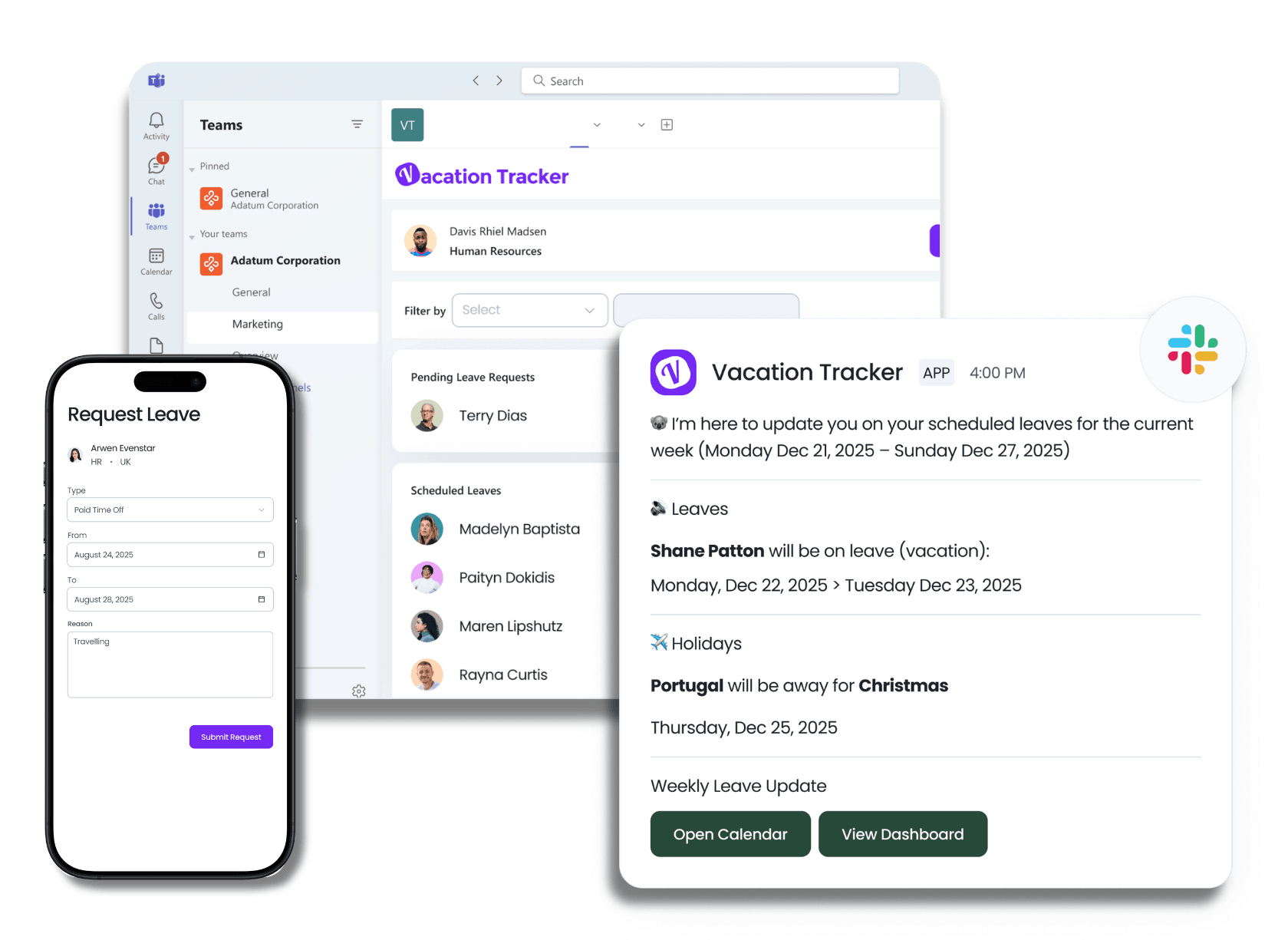
I'm putting Vacation Tracker first because it's the best tool on this list for most remote teams. It lives directly inside Slack, Microsoft Teams, and Google Workspace. Your team doesn't need to learn another platform or remember another login.
The global coverage is what sets it apart from US-centric competitors. It handles international policies easily, which matters when you have team members across multiple countries. You can set blackout periods (critical during product launches) and probation periods (important when you can't physically oversee new hires).
The pricing model actually makes sense: unlimited users on the free plan. Most competitors charge per user, which gets expensive fast. Vacation Tracker scales from tiny startups to distributed teams of any size without the pricing becoming a problem.
Deel Handles Legal Compliance When You Hire Internationally
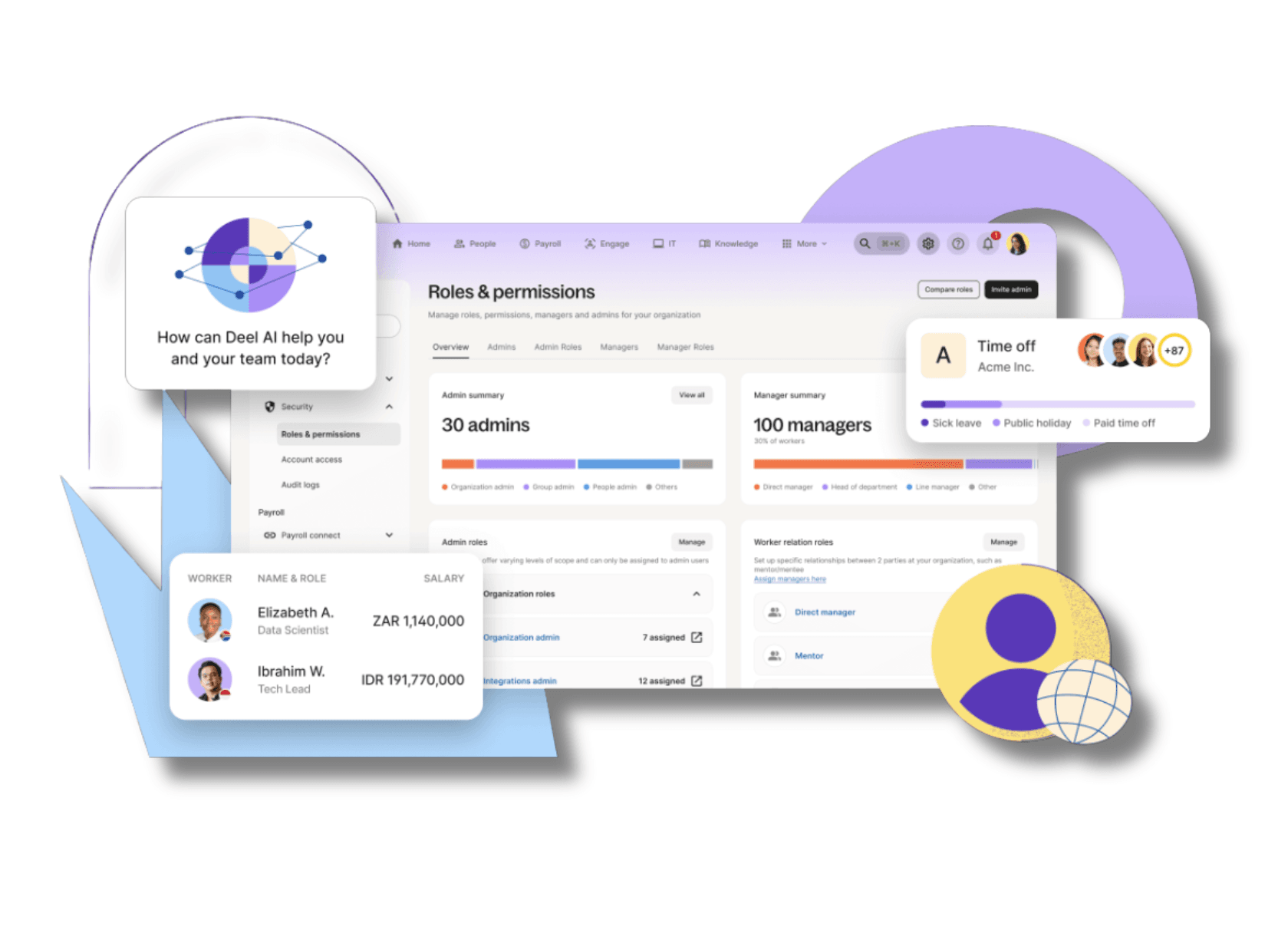
If you're hiring people in countries where you don't have a legal entity, Deel becomes necessary. This isn't just a leave tracker. It's a global-first platform that serves as an Employer of Record, handling payroll and compliance across borders.
Deel integrates with Slack, Zoom, and Google Workspace. The real value shows up when you need to ensure your leave policies are legal in Germany, Brazil, and Japan simultaneously. It's the heavy lifter for companies with complex international hiring.
The downside is obvious: it's expensive. Really expensive. You're paying for legal infrastructure, not just software. If you don't need that infrastructure, you're overpaying.
Flamingo Works for Slack-First Startups with Simple Policies
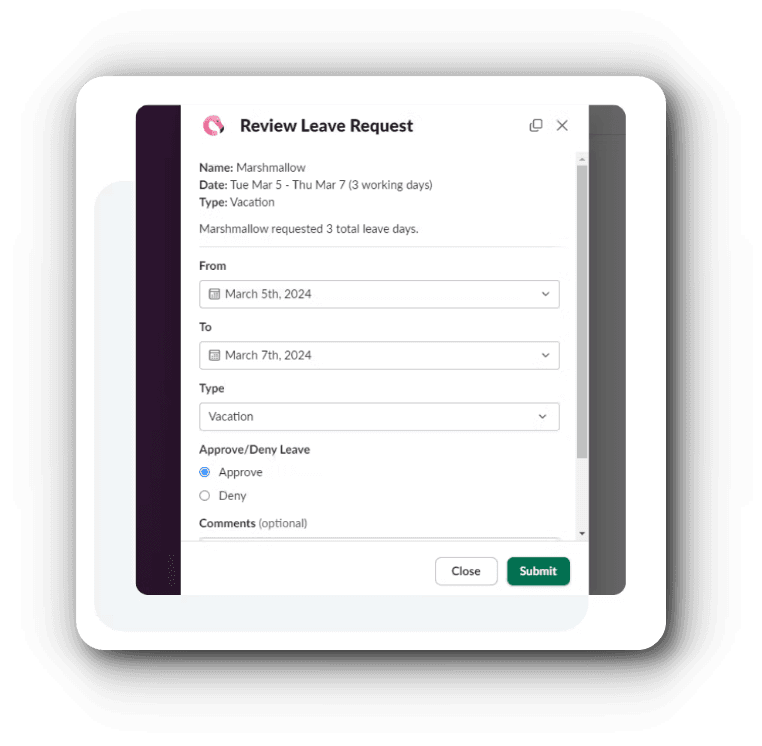
For smaller teams that live in Slack and want to keep policies simple, there's Flamingo. It's designed specifically for remote teams with a Slack-native request and approval flow.
The pricing is a flat fee for up to 99 users. That works well if you're in that exact range, but it lacks flexibility. Really small teams (under 10 people) end up overpaying compared to per-user models. There's no permanent free plan, just a 7-day trial.
It's solid if you fit their niche perfectly. If you don't, look elsewhere.
Rippling Combines Leave Tracking with Device Management
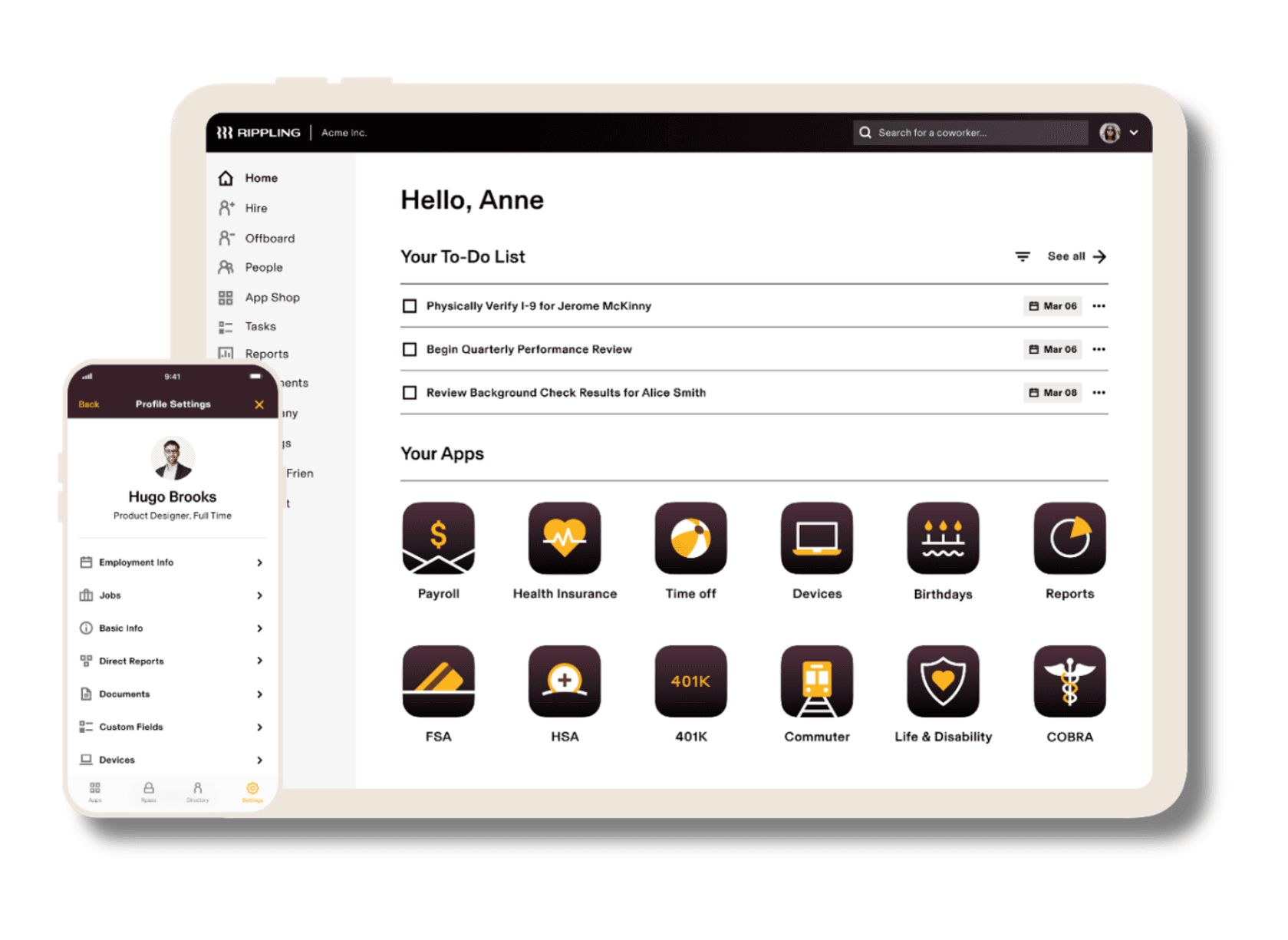
Some remote teams have a hidden problem: managing company laptops and equipment. Rippling solves this by providing unified automation for HR, IT, and finance.
This makes sense for mid-sized businesses (roughly 50 to 2,000 employees) that need device management on top of leave tracking. When someone goes on leave, you can automatically adjust their access permissions and track their equipment status in the same system.
The pricing is often hidden and high. Setup fees usually apply. If you only need leave tracking, Rippling is overkill. If you need the full HR and IT stack, it's worth considering.
Calamari Adds Time Billing for Client-Facing Teams
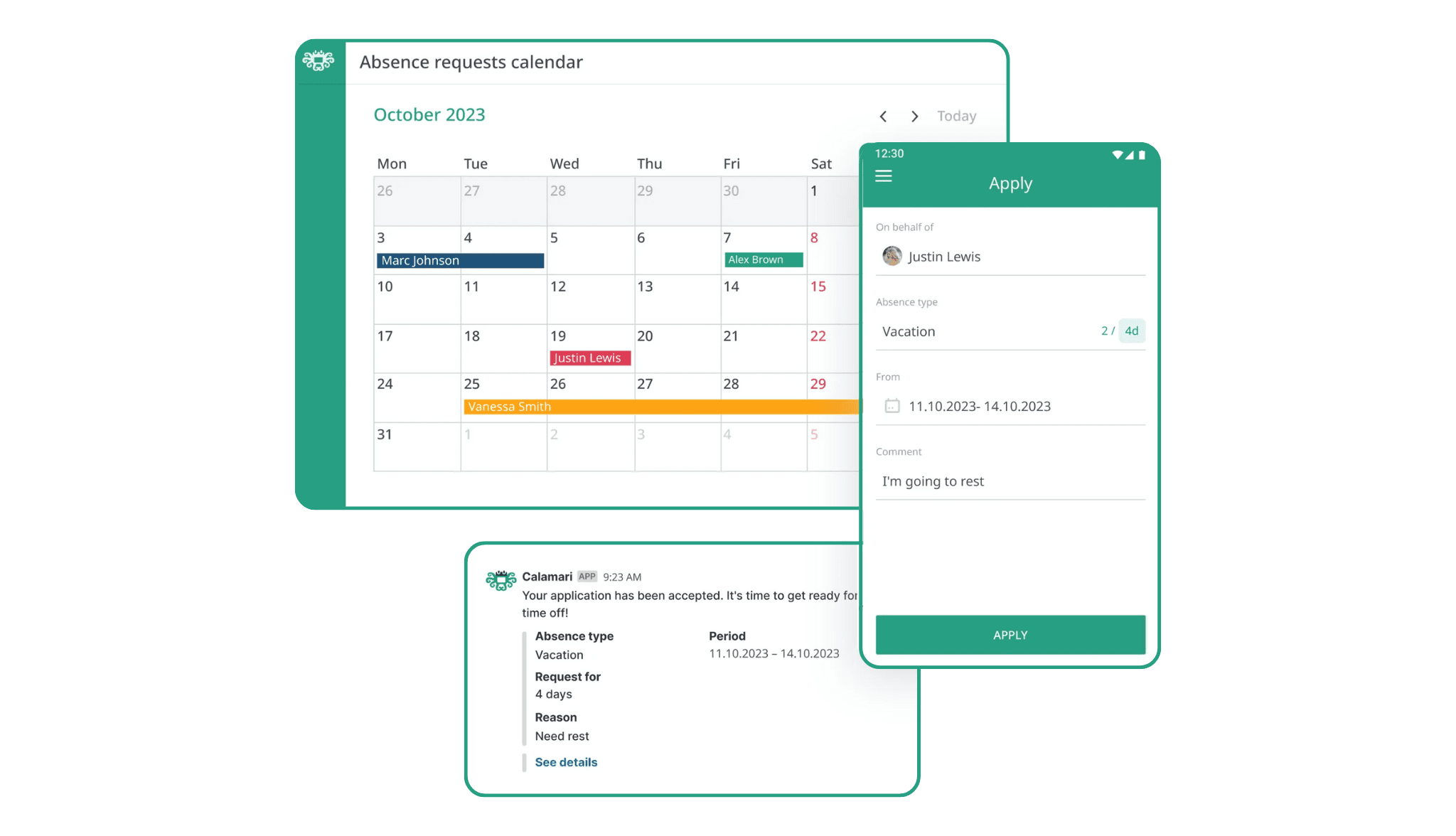
If your remote team bills clients per hour, Calamari might be necessary. It targets startups and remote-first companies that need both PTO tracking and client time billing in one place.
It uses iBeacon technology and houses timesheets alongside project time tracking. The modular approach means you pay for what you need, but setup is more complex than a pure leave tracker.
This works best for agencies and consultancies where billable hours matter as much as time off.
AttendanceBot Handles Shift Planning for Hybrid Teams
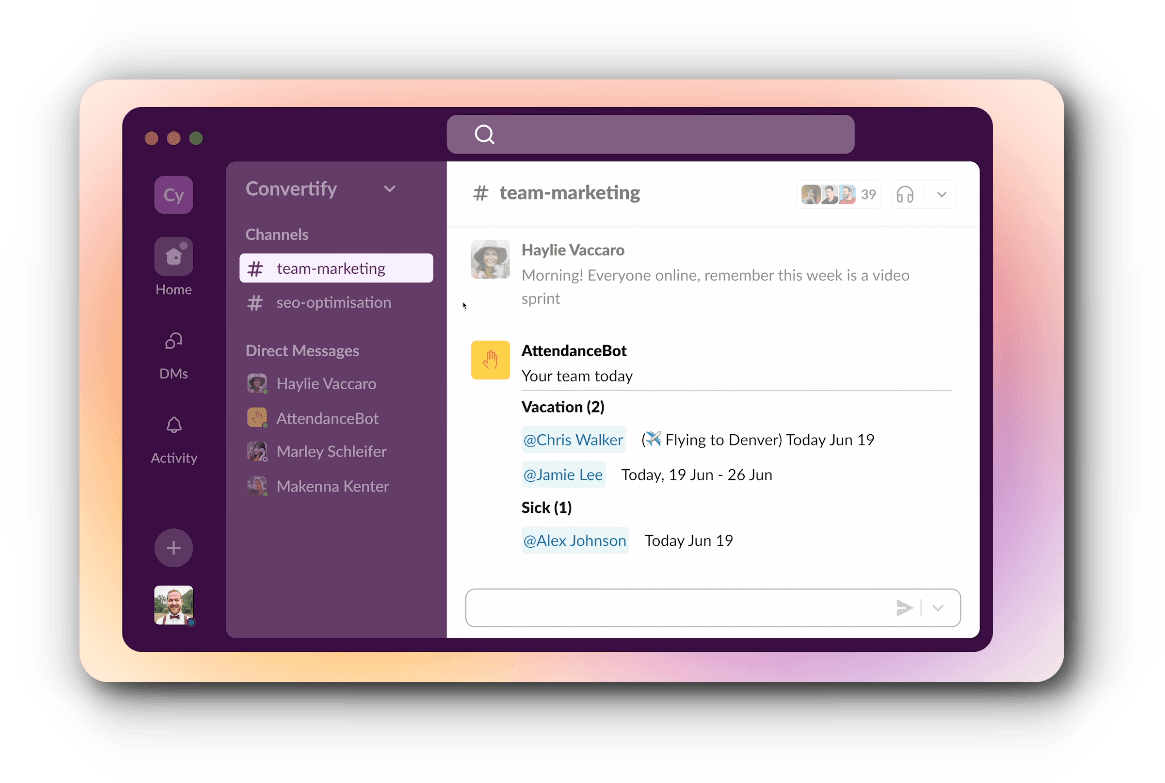
Similar to Calamari, AttendanceBot targets remote and hybrid teams that need shift planning alongside leave tracking. It lives in Slack and Teams, making it accessible for distributed workers.
The time clock functionality and billable hours tracking make it useful for agencies and freelancers. If your remote workers follow strict shifts rather than asynchronous hours, this is a strong option.
Day Off Offers a Mobile-First Experience on a Budget
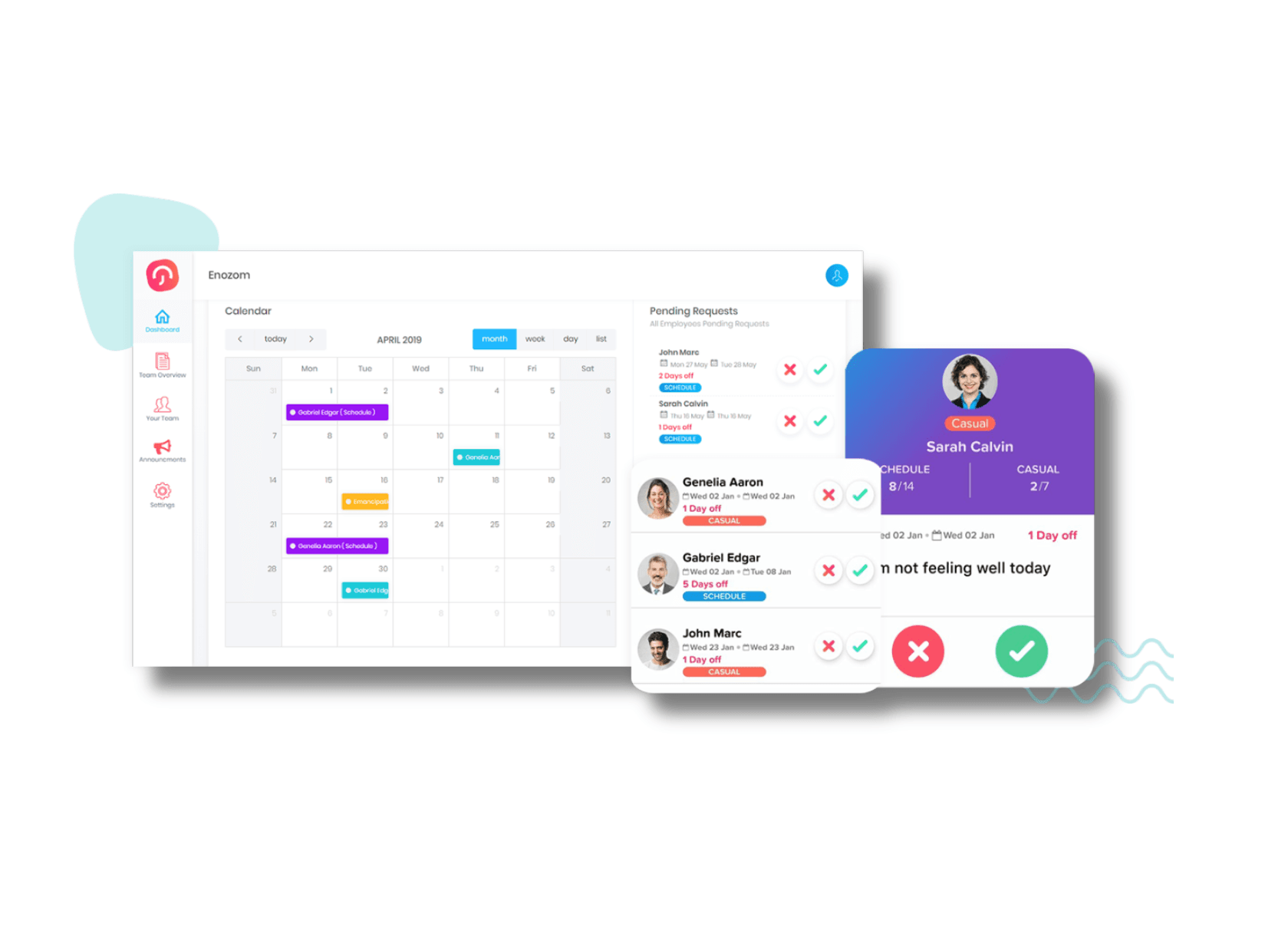
For global teams that want a mobile-first experience, there's Day Off. It targets small to midsize teams wanting affordable, simple tracking.
The free forever plan is limited to 10 employees, which is less generous than Vacation Tracker's unlimited free tier. But the rich calendar synchronization options make it a decent budget pick for really small, phone-heavy teams.
Which Tool Should You Actually Choose?
Most remote teams should start with Vacation Tracker. It solves the core problem (distributed leave tracking) without forcing you to adopt a bunch of features you don't need. The unlimited free plan removes the risk of trying it.
If you're hiring internationally and need legal compliance across borders, pay for Deel. The cost hurts, but employment law violations hurt more.
If you need to manage company laptops and IT equipment remotely, look at Rippling. Just be prepared for the pricing conversation.
For specialized needs (time billing, shift planning, mobile-first access), the other tools fill specific gaps. But for accessible leave tracking that works for distributed teams of any size, Vacation Tracker wins.

Annika Helendi
Annika is a fan of marketing and AI.