
Last updated on February 6, 2026
Most teams don't burn out because of the workload. They burn out because of the timeline. When your lead engineer hits a wall, you don't just lose 'wellness.' You lose six months of product roadmap.
Burnout is a logistics failure, not an emotional one. This post breaks down how to use the data you already have (PTO tracking) to predict energy dips before they turn into resignations.
Want to see how this works in practice? Watch the full breakdown:
Why Burnout Costs More Than You Think
Burnout isn't a soft problem. The data is clear: burnout links directly to lower productivity, higher absenteeism, and increased turnover. Teams under chronic fatigue make more mistakes, need more rework, and move slower even if they're online all day.
What makes burnout dangerous is that most managers don't see it until output drops or someone quits. By then you're reacting, not managing.
Traditional Burnout Detection Methods Don't Work
Most teams rely on engagement surveys, one-on-one meetings, and gut feeling. But surveys are infrequent and employees downplay their distress. In one-on-ones, people rarely say 'I'm burned out' directly. High performers often hide it the best (even from themselves, to be honest).
Burnout usually shows up in behavior, not in words. One of the clearest behavioral signals is how people take or avoid taking time off.
Four PTO Patterns That Signal Burnout Risk
The PTO data every company already has is actually a recovery signal. Here are the patterns that often indicate burnout risk:
- Long gaps without any time off
- Repeatedly postponing approved leave
- Taking PTO only after extremely stressful work periods
- Saving PTO days but never using them
Over time, these things show up as patterns. Spotting these patterns is what allows us to be successful at burnout prevention on a company level.
Why Most Companies Fail to Use Their PTO Data
It's not because they don't care. It's because they use simple spreadsheets that make it difficult to spot trends over time (especially on the employee level). Or they use simple calendars that don't show patterns easily.
Most PTO tracking systems were built for compliance and approvals, not for pattern recognition.
How Vacation Tracker Recharge Turns PTO Data Into a Performance Tool
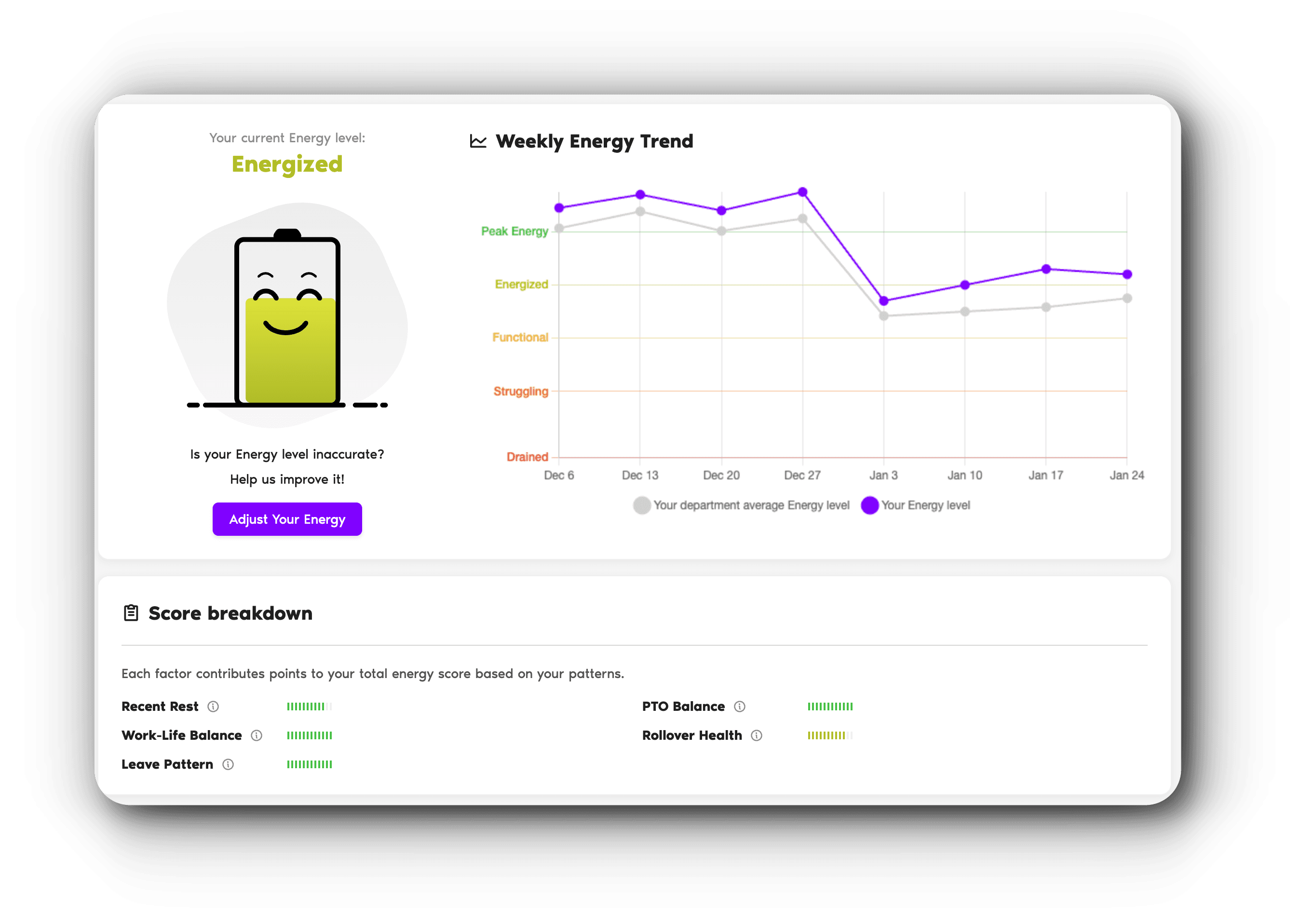
If you already use Vacation Tracker with your team, you can get access to the new Recharge features. Vacation Tracker Recharge adds a missing layer to burnout prevention. It gives you the option to manage your team's performance through managing their energy levels.
Here's what it does:
- Shows energy trends of your team members automatically calculated based on PTO data patterns
- Provides personalized energy profiles and recommendations for better time breaks for each employee
- Gives visibility into dips before performance actually starts suffering
- Makes requesting and approving PTO based on smart recharging recommendations super simple
We're building a simplified performance management solution inside PTO tracking. It works by noticing patterns that lead to burnout. But it also gives a competitive edge to smart managers who want to keep their team working at a sustainably high level throughout their careers.
Energy Management Is the New Performance Management
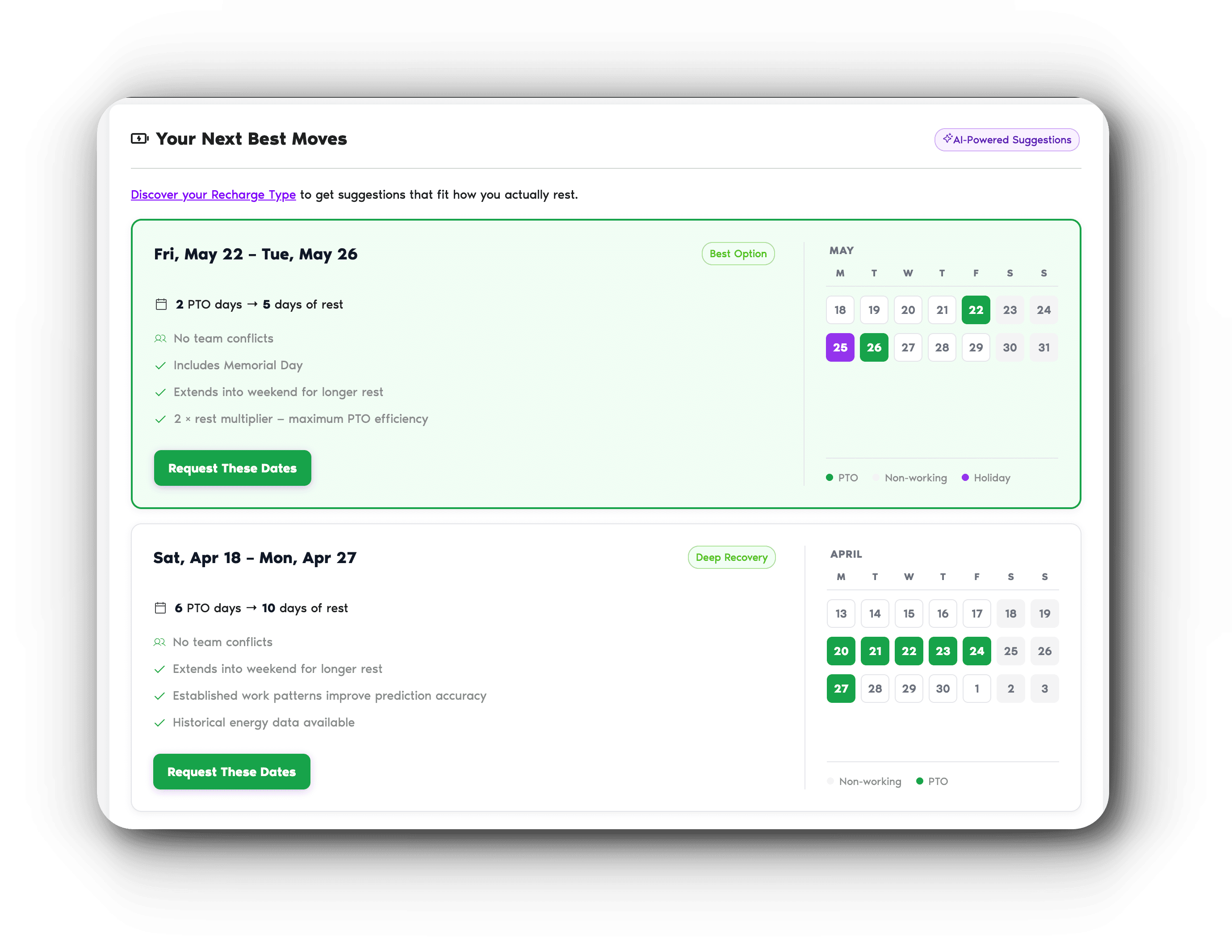
Vacation Tracker Recharge helps employees and team leaders see what's already happening with their energy before the earliest burnout signs show up. You don't have to collect any more data. Your PTO data is already working for you in the background.
If your team uses this data to recover from long-term stress in a smart and systemic way, they become unstoppable.
Burnout is predictable when you look at the right signals. And if you already track PTO, you're closer than you think. Check out Vacation Tracker Recharge to turn that data into healthier and more sustainable performance.

Annika Helendi
Annika is a fan of marketing and AI.