Last updated on December 15, 2025
Why Time Off Management Still Isn't Solved (And What We're Doing About It)
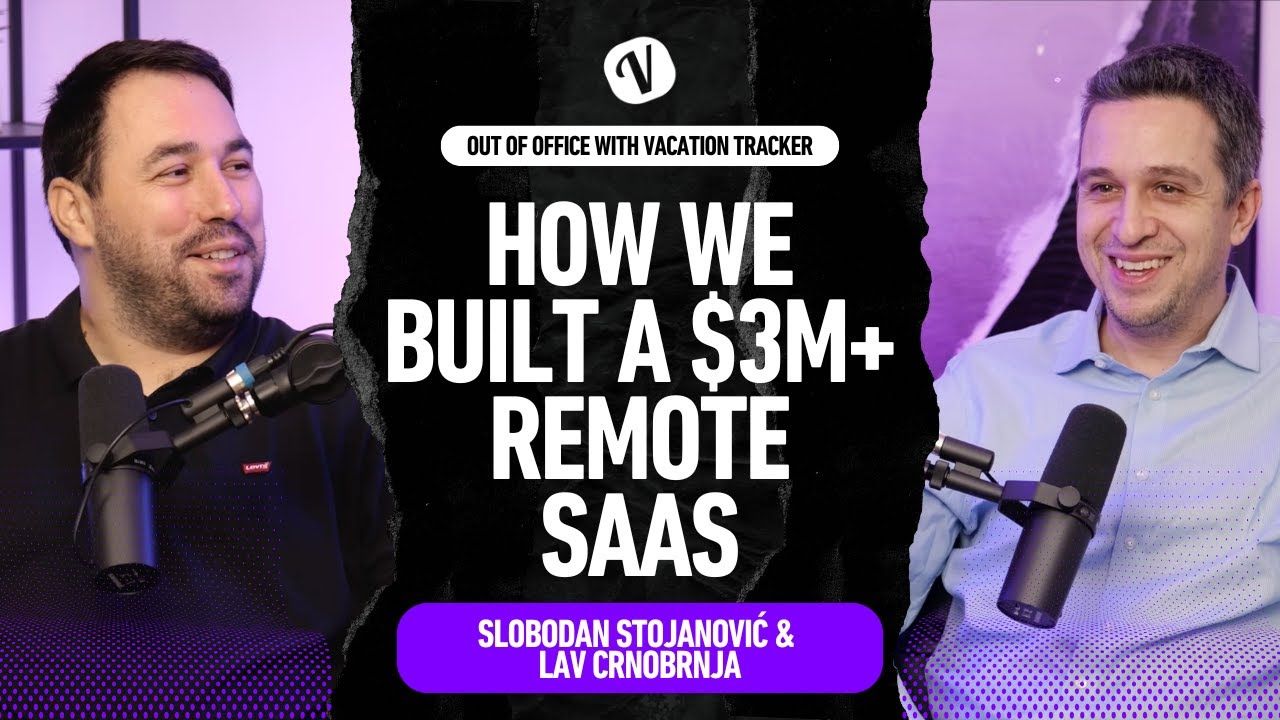
I recently sat down with Martin Gourdeau, our new CEO at Vacation Tracker, to talk about something most people assume is a solved problem: time off management. Spoiler alert - it's not. We covered why PTO systems still fall short, how energy management will reshape productivity, and what the future of HR tech actually looks like when you strip away the hype.
Watch the full conversation here:
Most PTO Systems Miss the Point Entirely
Here's what bugs me about most time off tools: they're built like accounting software. You log days, track balances, maybe generate a report. Done. But that's not how teams actually work.
Martin pointed out something I've been thinking about for years. When someone requests time off, the real question isn't 'do they have enough days in their balance?' It's 'can the team handle their absence right now?' Most systems can't answer that second question.
We built Vacation Tracker because we were tired of tools that treated people like interchangeable resources. Small teams (especially remote ones) can't afford to have three developers out during a product launch or two customer success managers gone during renewal season. The system should flag these conflicts before they become problems.
Energy Management Will Replace Time Management
Martin brought up something that completely reframed my perspective on productivity. We've spent decades obsessing over time management - blocking calendars, optimizing schedules, squeezing more output from every hour. However, time is no longer the constraint. Energy is.
You can have all the time in the world and still produce garbage if you're exhausted. I've seen it happen. A developer working 60-hour weeks might ship code, but it'll be buggy. A marketer pushing through burnout will write bland copy that converts poorly.
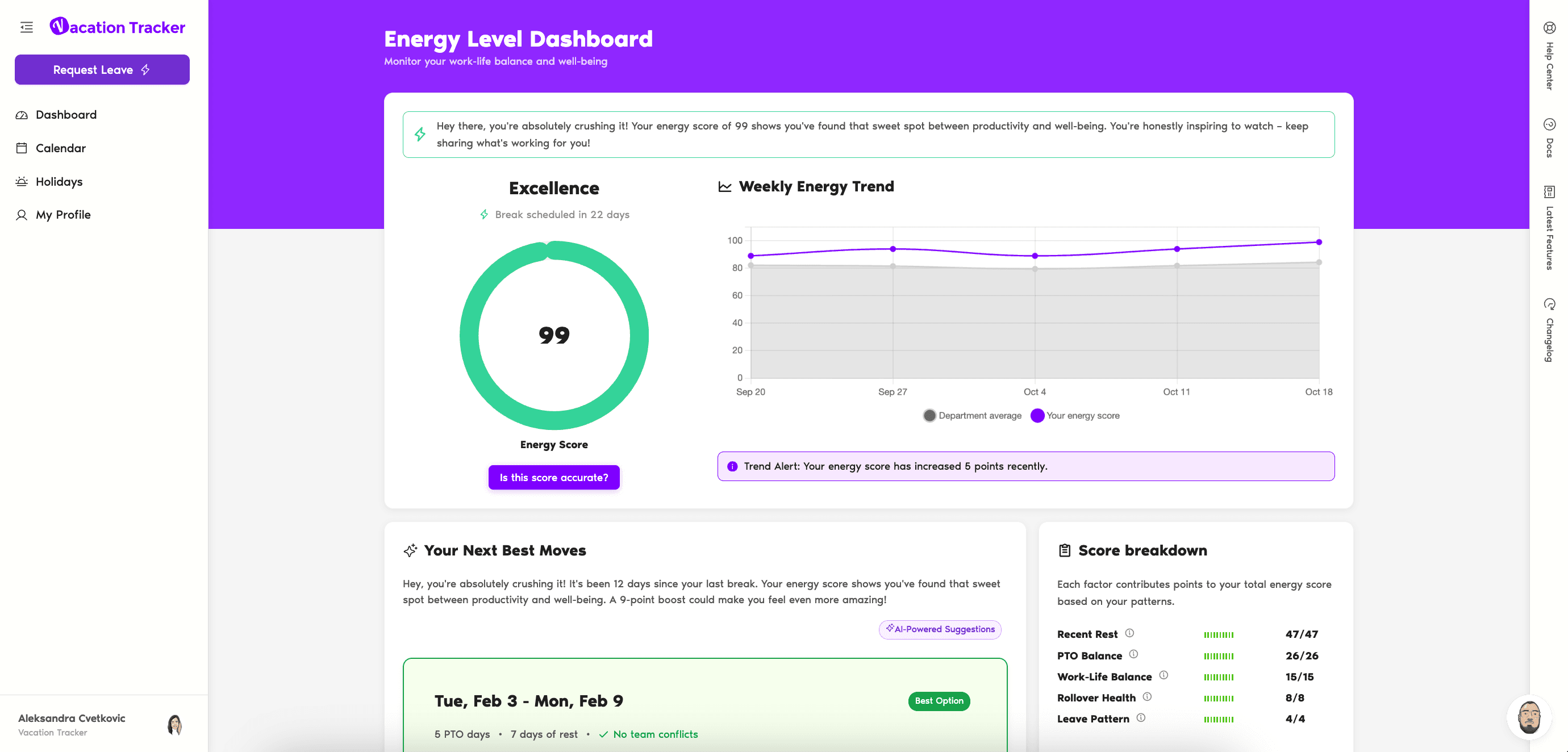
The companies that figure this out first will win. That means rethinking PTO not as a benefit employees 'use up' but as a tool for maintaining team performance. When someone takes a week off and comes back recharged, they're more valuable than if they'd ground through those five days at 40% capacity.
This is why we're focusing on features that help HR teams spot burnout patterns before they become retention problems. If someone hasn't taken time off in six months, that's a red flag worth investigating.
What AI Actually Means for HR Tech
Everyone's talking about AI in HR, but most of it is nonsense. No, an algorithm won't replace your HR manager. No, ChatGPT can't handle a sensitive employee conflict.
What AI will do (and what we're building toward) is handle the repetitive stuff that eats up HR's time. Answering the same policy questions over and over. Generating reports. Flagging scheduling conflicts. Suggesting optimal times for team off-sites based on historical patterns.
Martin's take resonated with me: AI should make HR professionals better at the human parts of their job, not replace them. If we can automate the administrative grunt work, HR teams can spend more time on things that actually matter - like helping managers coach their teams or designing better onboarding experiences.
Small Teams Need Different Tools Than Enterprises
This might be obvious, but it's worth saying: a 15-person startup doesn't need the same PTO system as a 10,000-person corporation. Yet most HR tools are built for the latter and then awkwardly scaled down.
Small teams need speed and flexibility. They can't afford three-week implementation timelines or dedicated HRIS administrators. They need something that works in Slack or Microsoft Teams because that's where they already live. They need pricing that makes sense when you're watching every dollar.
We designed Vacation Tracker for these teams. You can be up and running in minutes, not weeks. The interface is simple because your HR person is probably also doing recruiting, onboarding, and payroll. You can start a free trial and actually evaluate whether it works for your team without talking to a sales rep (though we're happy to give you a personalized demo if you want one).
The Future of Work Isn't About More Features
Martin and I spent a chunk of time talking about where HR tech is headed. The trap most companies fall into is feature bloat. They keep adding capabilities until the product becomes this unwieldy monster that does everything poorly instead of a few things well.
Our approach is different. We're focused on making time off management work the way teams actually operate. That means better visibility into team capacity. Smarter notifications when conflicts arise. Easier ways for managers to see who's available and who's not.
It also means thinking about time off in context with other work patterns. If someone's been working late nights for two weeks straight and then requests Friday off, that's different from someone who's been coasting and wants another long weekend. The system should know the difference.
Why Remote Work Changes Everything
Remote work broke a lot of assumptions about how teams operate. When everyone's in an office, you can see who's stressed, who's checked out, who's been grinding too hard. You notice when someone's desk is empty.
When everyone's distributed, those signals disappear. You need systems that surface them instead. That's why we're building features that help managers stay connected to their teams without resorting to surveillance software (which is creepy and counterproductive).
Simple things make a difference. Seeing that three people on your team haven't taken a day off in four months. Getting a heads-up when someone's PTO request would leave a critical project understaffed. Having visibility into time zones so you're not scheduling meetings at 3 am for half your team.
What We're Building Next
I'm excited about where we're taking the product. Without giving away too much, we're working on features that help teams make better decisions about workload distribution and capacity planning.
Think less about 'does this person have PTO available' and more about 'should this person take time off now based on what's happening with the team?' We're also building better integrations with project management tools, so time off doesn't exist in a vacuum separate from actual work.
The goal is to make Vacation Tracker the system that helps teams stay healthy and productive, not just compliant. If you want to see how we're thinking about this stuff, check out our ultimate guide or read about how to choose the right leave tracker for your situation.
The conversation with Martin reinforced something I already believed: the future of work isn't about squeezing more hours out of people. It's about helping teams perform at their best by respecting that humans aren't machines. We need rest. We need flexibility. We need systems that treat us like people, not resources.
That's what we're building.


David Vero
David is a marketer who loves learning new things—preferably not during his PTO.