Last updated on February 25, 2026
Remote work isn't going anywhere. But neither is burnout. If you're working from home (or managing people who do), you need a real plan to prevent mental exhaustion before it tanks your team's performance. Here's what actually works.
Watch the full breakdown of how to build your anti-burnout plan:
Remote Work Is Here to Stay (And So Are Its Risks)
The numbers don't lie. In the UK, 13% of jobs are fully remote with another 28% hybrid. One in four US jobs are telework positions. In Canada, 56% of workers prefer hybrid arrangements to full-time office life.
People aren't just tolerating remote work anymore. They're demanding it. Flexibility has shifted from nice-to-have perk to deal-breaker retention factor.
But here's what nobody wants to admit: working from your couch in sweatpants comes with serious risks to your mental health.
What Burnout Actually Is (Not Just Being Tired)
Burnout happens when what you put into work consistently exceeds what you get back from it. It's an energy deficit that compounds over time.
There are two types:
Physical burnout affects people in manual labor jobs like construction or service industry work. Your body gives out before your mind does.
Mental and emotional burnout is what hits knowledge workers. You're sitting in a comfortable chair all day, but the work feels increasingly pointless and draining.
This second type is what we're talking about here. It's the deadliest form of burnout for remote workers.
Why Remote Work Makes Burnout Worse
Working remotely sounds great until you realize you're missing the spontaneous coffee machine conversations and quick office pop-ins that used to break up your day.
Here's what makes remote workers especially vulnerable:
Disconnection from colleagues. No watercooler moments. No casual face time. Just scheduled Zoom calls and Slack messages.
Isolation. Working alone without a co-working space or regular friend meetups gets lonely fast, even with a flexible schedule.
Constant communication. Your phone and laptop ping you at all hours. Poor boundaries mean you're answering emails from bed, from vacation, from everywhere.
Lack of routine. More freedom requires more structure. Without it, your days blur together into an exhausting mess.
If any of this sounds familiar, you're not alone. Most remote workers hit these walls eventually.
The Silent Warning Signs Your Team Is Burning Out
How do you know if you're just working hard or actually burning out? Here are the documented signs:
Sleep problems. You're either lying awake thinking about work or sleeping a full night and still waking up exhausted.
Physical symptoms. Your body stops cooperating. Frequent illness. Tension headaches. General malaise when you're normally healthy.
Emotional distance. You're irritable and antisocial when that's not your baseline personality.
Constant crisis mode. Everything feels like a fire drill. You're always in fight-or-flight, always putting out emergencies.
If two or three of these describe your current state, you need to act now.
Who's Actually Responsible for Preventing Burnout?
Both you and your company. Let me break it down.
Your personal responsibility:
- Maintain your daily routines (diet, exercise, social life) regardless of where you work
- Create clear boundaries between work and personal time
- Separate urgent tasks from everything else
- Actually use your PTO
These basics apply to any job, but they're critical in remote work.
Your company's responsibility:
- Train managers to recognize burnout signs before they reach crisis level
- Establish clear policies about breaks, lunch hours, and offline time
- Support asynchronous work arrangements that let people work when they're most productive
- Provide tools and systems that make energy management visible and actionable
Business is a team sport. Remote work makes isolation easy, but you're still part of an organization. Use those resources.
Building Your Anti-Burnout Work Plan
A real prevention plan includes:
- Understanding what burnout is and recognizing the different types
- Knowing the specific warning signs that apply to you
- Taking personal responsibility for routines and boundaries
- Getting organizational support through manager training and clear policies
- Using the right tools to track patterns before they become problems
That last part matters more than most people realize.
The Tool That Makes Burnout Prevention Measurable
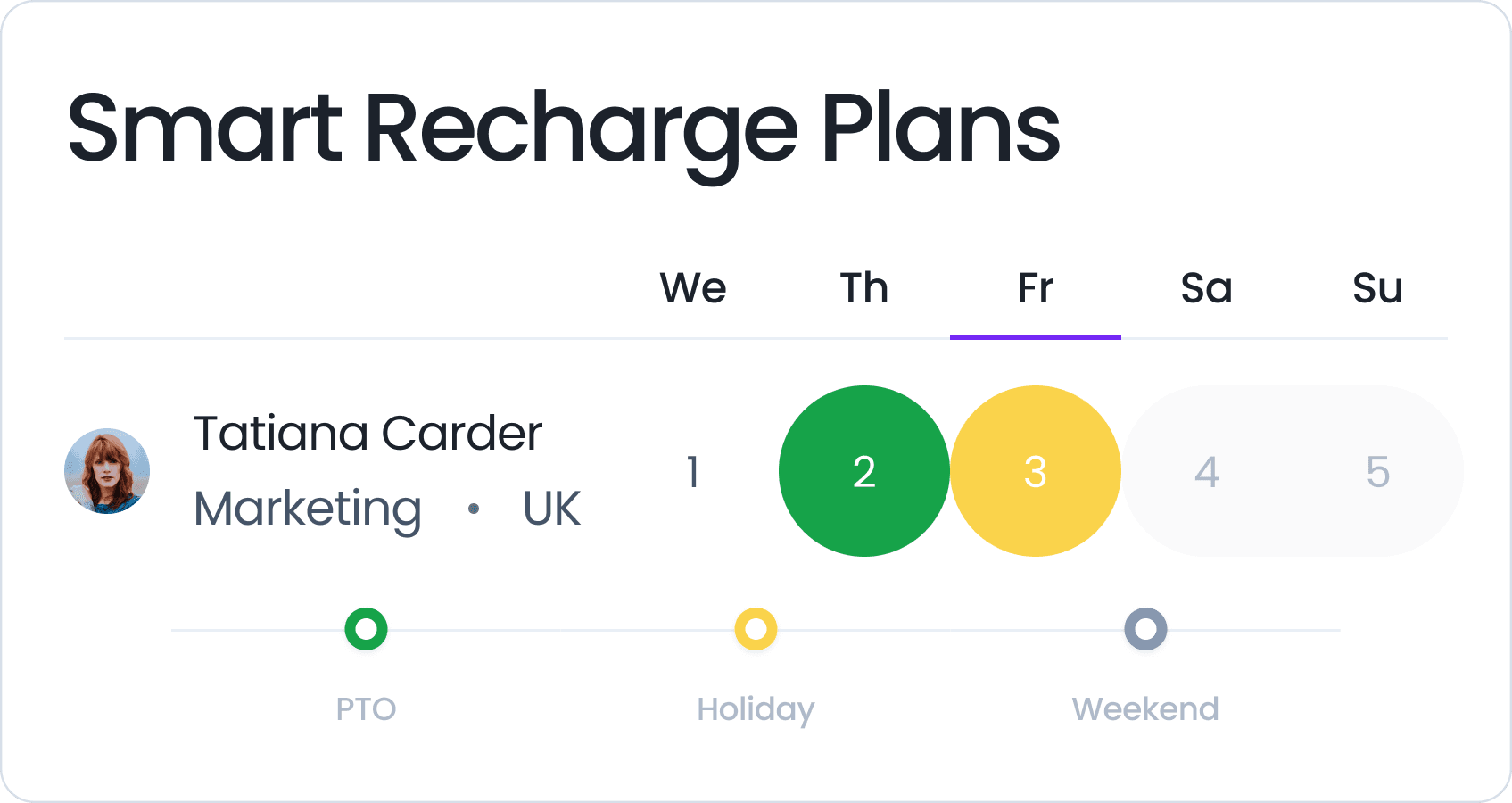
Recharge by Vacation Tracker is software built specifically to prevent and detect burnout in remote teams before it happens.
Here's what it does:
Energy dashboard. Each team member gets an easy-to-read view of their current energy levels.
AI-powered vacation recommendations. The system suggests when to take your next time off based on actual data, not guesswork.
Weekly trend tracking. See whether your energy is trending up or down week by week.
Integrated PTO requests. Request time off directly in the app without juggling multiple systems.
Uses existing PTO data. No manual data entry. It works with the information your company already tracks.
The software integrates directly into Slack, Microsoft Teams, and Google Workspace, so it fits into your existing workflow.
What Happens When You Actually Prevent Burnout
Teams that use intentional recovery strategies and track PTO patterns see real results. People stay engaged longer. Performance stays consistent. Nobody gets blindsided by sudden resignations or medical leaves.
Work-life balance isn't just a policy you write down and forget about. It's energy management. It's tracking patterns. It's intervening early.
For founders, managers, HR leaders, and operations people who've ever thought 'Everything seemed fine, I didn't see this coming,' this is your prevention system.
Remote work is part of the future. Burnout doesn't have to be.
Annika Helendi
Annika is a fan of marketing and AI.