Last updated on December 11, 2025
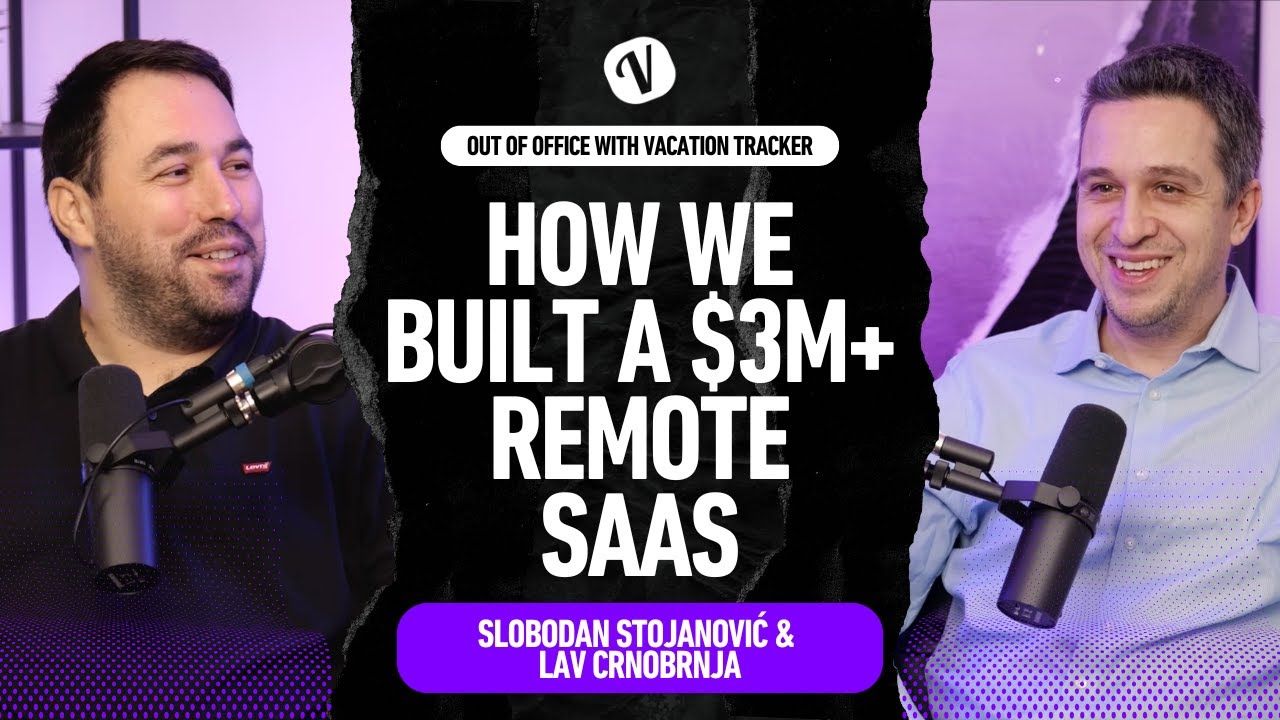
Slobodan Stojanović and Lav Crnobrnja didn't set out to build a million-dollar SaaS company. They just wanted to solve their own annoying problem with tracking time off in their consulting agency. Seven years later, Vacation Tracker is approaching $3M ARR, operates fully remote across six countries, and just brought on a CEO who previously scaled a $100M+ company.
Here's how they did it (and what they'd do differently).
The Accidental Beginning: When a 'Dumb Idea' Becomes a Business
Vacation Tracker wasn't the plan. Lav and Slobodan met in 2011 through mutual friends and started Cloud Horizon, a mobile development agency. They spent years building products for other clients, always itching to work on their own thing.
In late 2016, they ran an internal hackathon at Cloud Horizon. The team split into two groups. One worked on something called 'beergram' (which never went anywhere). The other created a basic landing page for a vacation tracking tool.
Then they forgot about it for a year.
Cloud Horizon was having its best year ever. New clients, growing team, no time for side projects. The vacation tracker landing page sat there collecting emails from people who stumbled across it.
The trigger came unexpectedly. Someone from a school in California dug through their website, found Lav's email, and asked when they'd actually launch the product. This person had been waiting almost a year.
Lav remembers thinking: 'Wow, this guy really wants this product. He went through all this trouble to figure out that Cloud Horizon built Vacation Tracker and wrote me an email.'
That email kicked things into gear.
The Real Problem They Were Solving (Without Knowing It)
When Cloud Horizon hit 15 people, spreadsheet chaos began. Who's on vacation when? How many days does everyone have left? Multiple people editing the same Excel file, checking version history to see if someone actually added those days off.
Lav initially thought it was a dumb idea. Too small a market. Just little companies like theirs would need it.

He was completely wrong.
After launch, they saw signups from H&M, schools, nonprofits, government organizations, and (surprisingly) over 100 churches. Even Netflix tried to sign up (and broke their signup system in the process).
The insight: HR systems are almost always country-specific. If your team is distributed across multiple countries, you can't get visibility into who's off when. A developer in Canada needs to know when developers in Serbia are taking time off. Traditional HR systems don't solve this.
Vacation Tracker did.
Building the World's Worst MVP (That Actually Worked)
In January 2018, they assigned Srdjan Prpa (still with them today) to build Vacation Tracker. They assigned another developer to work on a time tracker (which never launched despite having a UX designer and nice design).
The first version was embarrassingly basic. Slack only allowed five buttons per row, so they created a calendar with buttons representing only workdays. No weekends. No date picker. Just buttons.
They recorded a GIF of this horrible interface and put it on the landing page.
In April 2018, they finally launched. Lav's ex-wife (wife at the time) pushed them to stop stalling and get it out the door.
Features at launch:
- Request vacation
- Approve vacation
- Import people from Slack
- Notifications
- One leave type (just vacations)
That's it. No public holidays. No leave types. No calendar sync. Just the absolute minimum to solve the problem.
Almost 9 months from starting development to the first $25 payment.
The First Customer Who Stayed for Seven Years
In August 2018, the first payment came through. $25. They were sitting in a restaurant near their Belgrade office having a difficult conversation about Cloud Horizon when Lav got the notification.
He bought rakia (Serbian brandy) for everyone to celebrate.
That first customer is still using Vacation Tracker today. So is the guy who emailed them a year before launch.
They emailed everyone on their waitlist (almost 100 people, including friends and their moms). About 20 signed up. They offered six months free.
Then in July, they wiped the production database. Backups weren't working (they fixed that immediately). They extended everyone's free period as an apology.
Classic startup mistakes, handled quickly.
How Cloud Horizon Funded Vacation Tracker (Their Internal VC)
They never raised external funding. Cloud Horizon acted as their venture capitalist.
The consulting business generated steady revenue. Vacation Tracker operated at a small loss initially. Cloud Horizon covered the gap.
Slobodan explains: 'We used profits from Cloud Horizon to create Vacation Tracker. It was managed so we had some gap that Cloud Horizon was bridging.'
This gave them freedom to experiment without pressure from external investors. They could take their time. Make mistakes. Learn.
Eventually, Vacation Tracker became profitable and even stepped in to help Cloud Horizon when that business wound down in 2022.
Listening to Customers Built the Product (Not Their Vision)
Everything improved based on feedback. They talked to customers constantly (and still do).
First request: 'This is awesome but I need holidays.' They added public holidays.
Next: 'I have 20 public holidays. Can I import them?' They connected Google Calendar.
Then: 'I want to sync this with my calendar and export data to correlate with payroll.'
Each feature came from real customer problems, not their roadmap.
Lav points to their Cloud Horizon experience: 'Customers come to us and say here's the solution to my problem, build it for me. We always tried to understand the actual problem first. Most of the time the solution they had in mind wasn't the best one.'
They brought this thinking to Vacation Tracker. When customers request features, they dig deeper. Often the real need is different from what they're asking for.
Going Fully Remote (Thanks to COVID)
Before COVID, they ran a hybrid model. Two offices (Belgrade and Montreal), with team members required in the office Monday and Thursday. The other three days were optional remote.
This was ahead of the curve in 2018, but they'd always wanted to go fully remote. The problem: managing two businesses made it complicated to have different policies.
COVID forced their hand. They spent $120,000 a year on offices nobody used for an entire year.
That's when they made the call: fully remote, permanently.
The savings funded something they'd dreamed about for years: team retreats. First in the Serbian mountains (easier to bring three Canadians to Serbia than vice versa). Then Spain. Recently Greece.
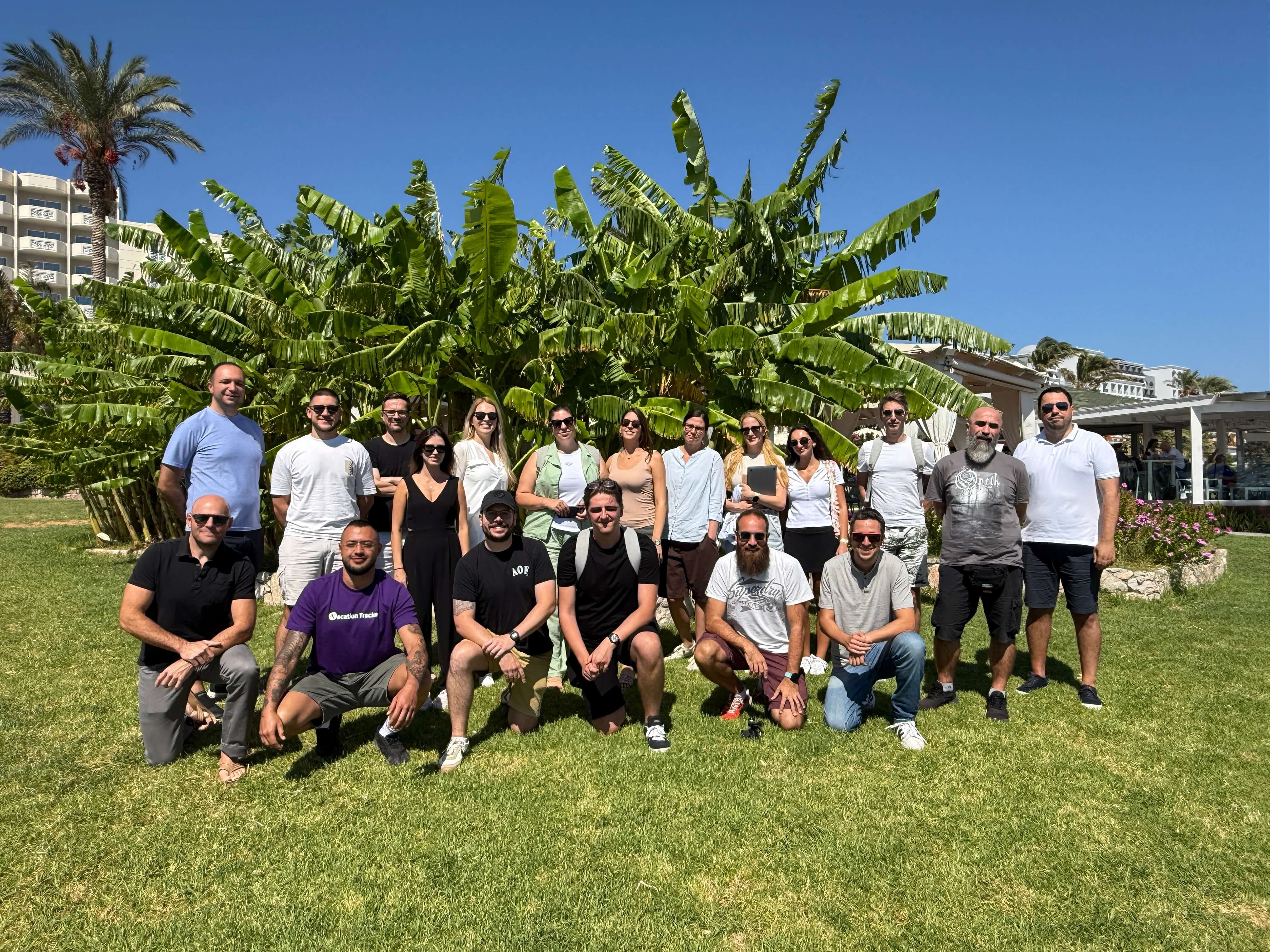
Now they have team members across six countries: Canada, Serbia, Spain, Estonia, Colombia, and Greece.
Slobodan notes: 'It's not so easy when you don't see people. You don't always know if they are close to burnout or low energy. You need additional signals.'
They're building features into Vacation Tracker to help with exactly this problem.
The Growth Waves They Caught (And Channels That Failed)
Multiple growth waves pushed Vacation Tracker forward:
Wave 1: Slack Bots (2018)
They launched right when Slack bots were new. Early mover advantage in a growing ecosystem.
Wave 2: Microsoft Teams (2020)
During COVID, companies rushed to Teams. Vacation Tracker was one of the first integrations available. Massive growth spike.
Wave 3: Content Marketing
Annika Helendi (now full-time with them after seven years) suggested content from day one. They've followed that playbook consistently. It's their most effective channel.
Surprising failures:
LinkedIn - They tried multiple times with different experts and decent budgets. Never worked. Lav suspects it's because LinkedIn has become too spammy, though they tried it five years ago when it was less bad.
What Actually Works:
Customer recommendations became their second or third best channel. One out of every 10 signups comes from recommendations. They didn't even track this until someone suggested adding 'How did you hear about us?' to the signup form (they'd been allergic to adding fields, worried it would hurt conversions).
Content, Google Ads, and word-of-mouth drive most growth. Everything else they've tried has been hit or miss.
The $1M ARR Psychological Barrier
Hitting $1M ARR changed everything. Not the business mechanics, but how everyone perceived it.
Lav explains: 'At that point, I think we realized there's this thing called product-market fit. That's where we started getting more serious about hiring the right people.'
Before $1M, Vacation Tracker was a side project. After $1M:
- They took it seriously
- Other people took it seriously
- Hiring became easier (less risky for candidates)
- They had budget to experiment
- They could afford bigger mistakes
Slobodan adds a key metric: 'Our biggest customer is less than 1% of our monthly recurring revenue. That just happened organically, but it's a really good thing.'
No customer concentration risk. Hundreds of small customers creating stable, predictable revenue.
Why They Brought in an Outside CEO
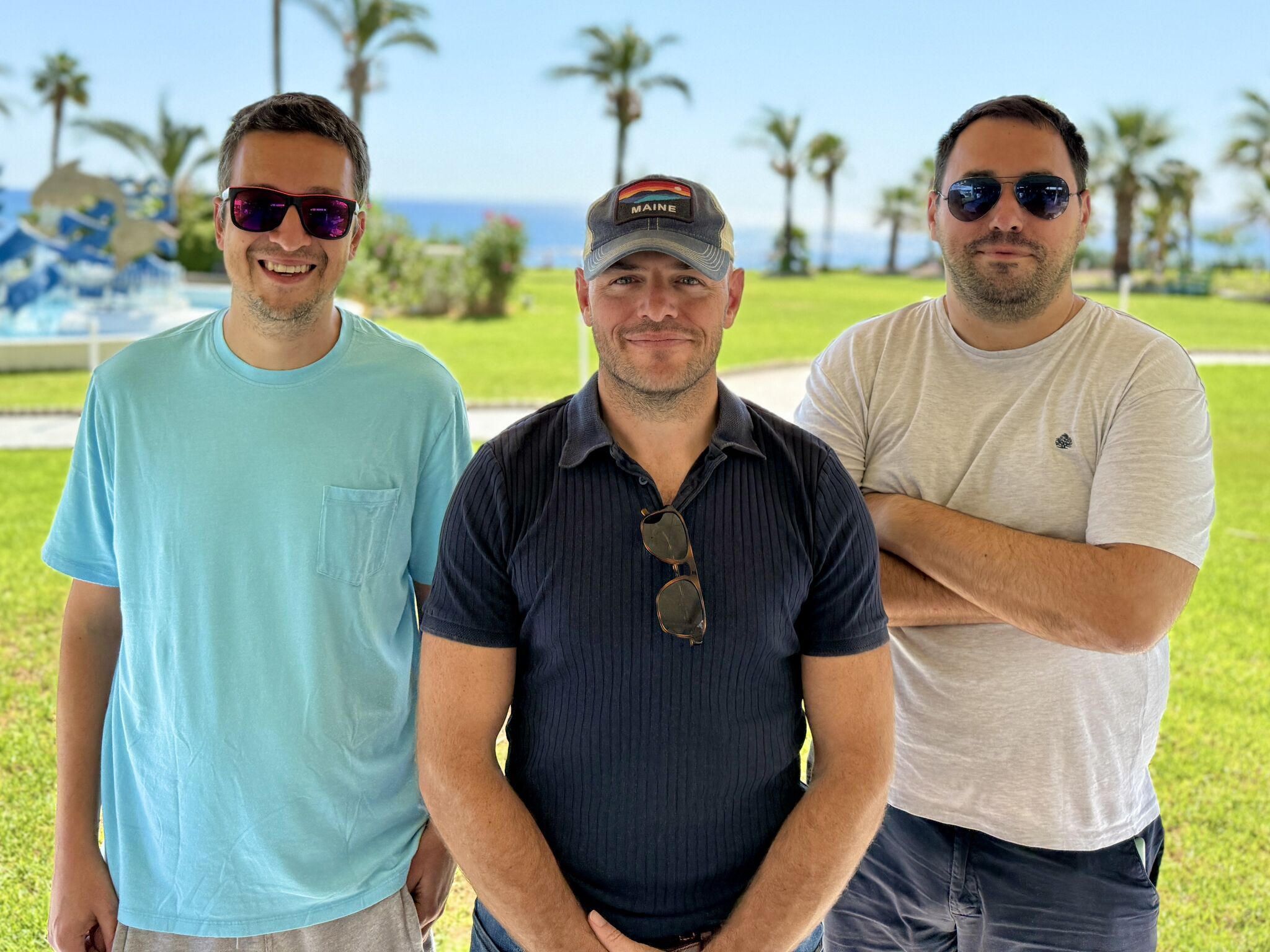
Around a year ago, Lav read something on Twitter about thinking bigger. Most founders aren't ambitious enough.
He asked Slobodan: What if we thought about Vacation Tracker as an order of magnitude bigger? Not $10M ARR, but $50M or $100M?
That conversation led to a realization: neither of them wanted to lead a company that size.
Lav: 'We thrive in chaos. We're good at taking chaos and making something out of it. But at the stage we're at right now, we need structure, we need organization. It's not that we can't learn these things, but if we want to move quickly, we would benefit from experience.'
The criteria for a new CEO became:
- Someone they both trusted
- Someone they'd worked with before
- Product experience
- HR tech knowledge
- Experience scaling to their target size
Only one name fit: Martin Gourdeau.
Martin had helped them with Cloud Horizon strategy years earlier. He'd been there when they set their first Vacation Tracker goal (he told them to aim for one customer, not 100). He'd just left his previous company where he'd gained relevant scaling experience.
Slobodan is direct: 'If we needed to search for a person instead of Martin, I don't really know how to do that. We were lucky not to.'
Trust made the decision easy. Martin joined a few months ago. Things are already moving faster in the right direction.
How Two Founders Make Decisions Without Killing Each Other
Early Cloud Horizon days included some public arguments. A team member once told another: 'Don't worry, mom and dad are arguing. They're not upset with you.'
That was the moment they learned to disagree behind closed doors.
Their system now: disagree and commit.
If Lav feels strongly about something and Slobodan disagrees, Slobodan will say: 'I don't agree, but I trust you. Let's try it your way. If it doesn't work, we'll course correct.'
Same thing in reverse.
Lav: 'We trust each other. We know we both want what's best for the company. If you feel really strongly and I trust you, then I'm okay doing something I disagree with.'
This only works because:
- They have complementary skills (Slobodan more technical, Lav more business)
- They're transparent with each other
- They both have a bias toward action
- They've built trust over 13+ years
Martin was initially confused by how direct they are with each other. They tell each other exactly what they think, no sugar coating.
Biggest Mistakes (That You Can Actually Avoid)
Slobodan's answer: 'Not doing something because you're afraid to make a mistake.'
The biggest failure is inaction. Everything else is correctable.
Specific mistakes they made:
- Waiting too long to experiment with pricing and packaging
- Being terrified to add a 'How did you hear about us?' field (when they finally did, they discovered recommendations were massive)
- Resisting a free plan for a year before finally launching it
- Hiring consultants who tried to replicate their previous success in completely different contexts
Lav on consultant failures: 'They walk in like I'll show you kids how to do this. Most of the time they fall flat on their face and realize this isn't as simple as I thought.'
What worked: moving fast, correcting quickly, staying focused on the problem (not the solution).
The Path from $0 to $3M ARR
No single moment unlocked growth. Just consistent execution across multiple areas.
Year 1 (2018): Launched in April, first payment in August, ended with 22-23 customers. Team: Srdjan (developer), Aleksandra (marketing, hired September), plus Lav and Slobodan splitting time with Cloud Horizon.
Years 2-3 (2019-2020): Microsoft Teams integration during COVID. Major growth wave. Started taking the business more seriously.
Years 4-5 (2021-2022): Hit $1M ARR. Cloud Horizon wound down. Vacation Tracker became the main focus. Went fully remote.
Years 6-7 (2023-2024): Approaching $3M ARR. Brought in Martin as CEO. Launched free plan, adjusted pricing, shipped major product updates.
Throughout: content marketing, customer feedback loops, riding platform waves, hiring carefully.
What Changed After $1M ARR
The money wasn't the main thing. The psychological shift was.
Before $1M: 'Maybe this could work.'
After $1M: 'This is working. How big can we make it?'
Practical changes:
- Easier to hire senior people (less risky for them to join)
- More budget to experiment with marketing
- Ability to make bigger mistakes and recover
- External validation (people at conferences using the product)
- Started thinking about structure instead of just survival
Lav: 'When you're constrained, survival mode kicks in. You have no choice. When you have money in the bank, that survival instinct doesn't kick in and it makes it more difficult.'
Constraints forced good decisions early on.
Why Marketing Matters As Much As Product
Slobodan's controversial take: 'Marketing is probably more important than product.'
Lav pushes back slightly but agrees on the fundamentals: 'You need to build an awesome thing, but you also need to tell people you built that awesome thing that solves their real problems. One without the other will not work.'
The trap young founders fall into: defaulting back to product when marketing doesn't work immediately. 'If I just add this feature, they'll come.' They won't.
Lav mentors younger entrepreneurs and sees this constantly: 'They think the product is going to solve their marketing problem. They find comfort inside the product. They launch, there's crickets, and instead of working on marketing, they build more features.'
Building it doesn't mean they'll come. You have to tell the story. Explain how it solves problems. Get people on board. Collect feedback. Iterate.
Running a Fully Remote Team Across Six Countries
Remote work wasn't planned. COVID forced it. Then they realized they loved it.
Key practices:
- No fixed working hours (except customer support)
- Goal-oriented instead of time-oriented
- Cameras on during meetings (suggested by their former product manager)
- Annual team retreats to exotic locations
- Hiring based on talent, not location
The challenge: knowing when people are close to burnout without seeing them daily. They're building features in Vacation Tracker to help with this (eating their own dog food).
Benefits: hire the best people anywhere, save $120K/year on offices, invest that money in bringing the team together in Greece instead of paying rent in Belgrade.
Advice for Founders: Just Start Moving
Their consistent message: bias toward action.
Slobodan: 'If you're not making mistakes, you're probably not moving fast enough. The biggest mistake is not doing things or doing things too late.'
Lav: 'It's better to be moving in the wrong direction than standing still, as long as you can course correct.'
Specific advice:
- Try things as fast as possible
- Fail fast (not because you want to fail, but to learn quickly)
- Don't outsource early product phases
- Use AI tools to move faster than ever before
- Talk to customers constantly
- Focus on the problem, not the solution
- Don't fall in love with your ideas (let them prove themselves)
On AI tools: They spent €1,000 and six weeks on a sticker design years ago. Recently created a better one with AI in 15 minutes. That's just one example of how much faster you can move today.
The common problem Lav sees: 'People are afraid of trying and failing. The big failure is actually not trying. What's the worst thing? No one will try your product. That's it.'
Why They'd Bootstrap Again (And Maybe Raise Later)
They get emails twice a week from people wanting to invest or buy the business.
Answer: no thanks, not right now.
Lav: 'If we got $10 million today, what would we do with it? If we had ideas on where we could invest all this money, then probably we'd raise.'
Bootstrapping benefits:
- Full control over decisions
- Full control over direction
- No pressure to grow faster than makes sense
- Profitable from early on
They're not opposed to raising money. They just don't need it yet. If they hit something adjacent to Vacation Tracker that needs funding to scale quickly, they might raise then.
The constraint of limited money actually helped. It forced them to start small, validate quickly, and build only what customers needed.
What's Next: Measuring Team Energy
They're launching a major update focused on measuring and optimizing team energy. The goal: help companies accomplish more while keeping people rested, focused, and actually wanting to work there.
Slobodan: 'There are so many things we want to try. I'm looking forward to talking and showing that to many different potential customers and existing customers.'
It almost feels like starting over. A new product adjacent to Vacation Tracker. Same early-stage steps: release to a small group, get feedback, iterate.
Lav loves this part. The uncertainty. The early stages. The chaos of building something new.
The Most Rewarding Part (It's Not the Money)
Lav: 'The most rewarding part has been the people we're working with and the learnings I'm doing because of those people. You hire smart people, you learn from them, you work with them, you're inspired by them.'
Slobodan adds: 'When I talk to customers and hear that we solved some of their real problems, that's when it feels worth it.'
Recent customer feedback: 'This tool is saving me so much time and improved our processes so drastically. Thank you for building this.'
Lav: 'When you receive feedback like that, you're like oh my god, it's all worth it. Building this startup is very difficult. There's a lot of dead ends. But then you get feedback like that and you're like okay, this is worth it.'
The team is what they're most proud of building. The product is good, but the team built the product.
Final Thoughts: The Perfect Time to Start
Both founders agree: there's never been a better time to start a company than right now.
AI tools let you build and test faster than ever. You can fail faster (which is good). You can validate ideas in days instead of months.
Slobodan: 'It's perfect time to do that. Just try something and eventually you'll figure it out. Unless you try, you'll never know.'
The biggest trap: overthinking. Sitting still. Waiting for perfect conditions.
Just start. Move. Course correct as you go.
Seven years in, they're still making mistakes. Still learning. Still moving fast.
That's the point.
Learn more about Vacation Tracker or try it free at vacationtracker.io.
Annika Helendi
Annika is a fan of marketing and AI.