Last updated on October 8, 2026
Vacation Tracker vs Leave Board: Which Leave Management Tool Actually Fits Your Team
I spent way too much time comparing leave tracking tools so you don't have to. If you're trying to pick between Vacation Tracker and LeaveBoard, you're probably drowning in feature lists and pricing tiers that all sound the same. Let me cut through that.
Here's what actually matters when choosing between these two platforms (and why the 'right' answer depends entirely on what kind of team you're running).
Watch the full breakdown here:
Vacation Tracker Works Best for Integration-Heavy Teams
Look, Vacation Tracker isn't trying to be your entire HR system. It does one thing really well: managing PTO and leave requests inside the tools your team already uses every day.
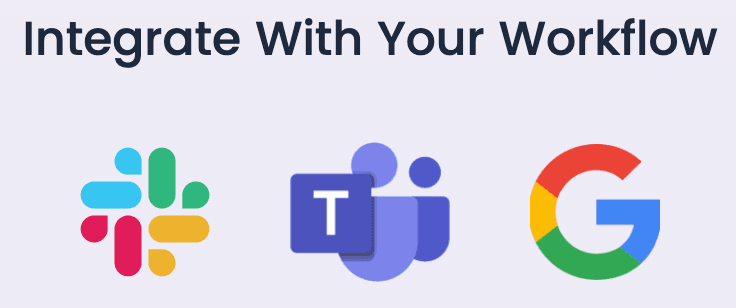
If your company runs on Slack, Microsoft Teams, or Google Workspace, Vacation Tracker plugs directly into those platforms. Your team can request time off without opening another app. Managers can approve leave from their existing workflow. It's not revolutionary - it's just sensible design.
The real strength here is policy customization. You can build complex leave policies that account for different employee types, locations, and accrual rules. This matters more as you scale past 50 employees and start dealing with multiple PTO structures.
The approval workflows are also more sophisticated than most alternatives. You can set up multi-level approvals, automatic escalations, and custom rules based on team structure. It could be overkill for a 10-person startup (still nice for the future), but necessary for larger organizations.
LeaveBoard Bundles More HR Features at a Lower Price
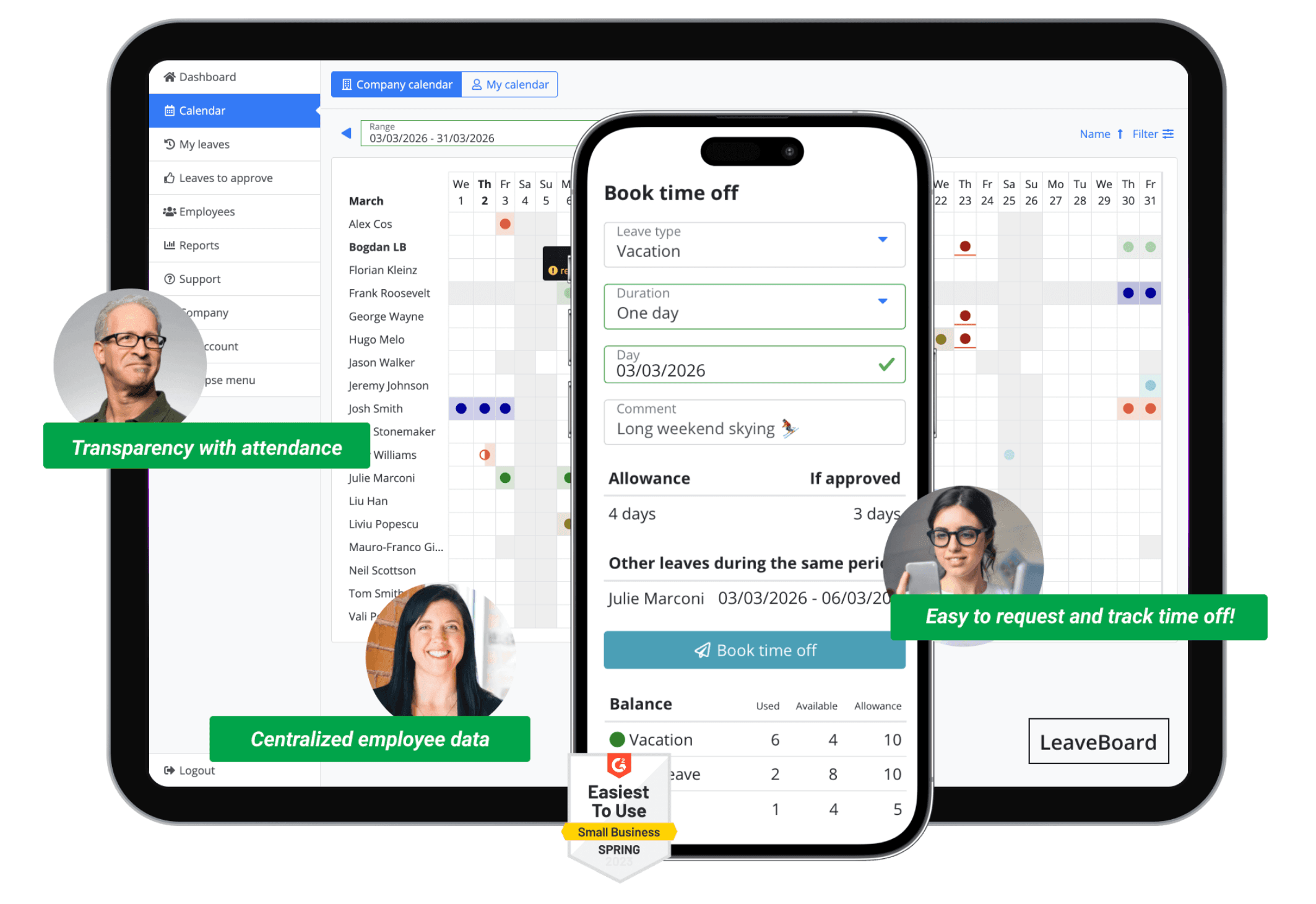
LeaveBoard takes a different approach. Instead of specializing in leave management, it bundles several HR functions into one lightweight platform.
You get leave tracking (obviously), but also attendance management, employee directories, and basic HR reporting. For smaller teams that don't want to pay for separate tools, this makes sense. Why buy three different SaaS products when one does the job?
The pricing is more accessible for bootstrapped companies and small teams. You're trading some advanced features for a lower monthly bill and broader functionality. That's a reasonable tradeoff if you're under 30 employees and don't need complex policy customization.
The attendance tracking is actually useful here. You can monitor who's in the office, who's remote, and who's out on leave from one dashboard. It's not groundbreaking, but it solves a real coordination problem for hybrid teams.
Where Vacation Tracker Falls Short
The biggest weakness is pretty obvious: you're paying for a narrower tool. If you need other HR functionality, you're buying additional software on top of Vacation Tracker. That can add up fast.
The learning curve is steeper too. All that policy customization and workflow flexibility comes with complexity. Your HR person (or whoever manages this) needs to invest time setting it up properly before the ease of use sets in fully.
Comparing Core Leave Management Features
Both platforms handle the basics: PTO requests, manager approvals, leave balances, and calendar views. That's table stakes for any leave tracking tool in 2025.
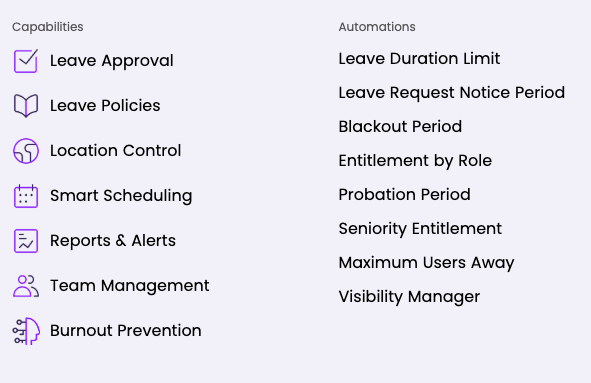
Where they diverge is customization depth. Vacation Tracker lets you build more complex policies with different accrual rates, carryover rules, and approval chains. LeaveBoard keeps it simpler - which is either a feature or a limitation depending on your needs.
Integration quality matters more than most comparison charts suggest. Vacation Tracker's native integrations feel more polished because that's their core focus. LeaveBoard's integrations work, but they're more basic. You get the data sync without the workflow optimization.
Reporting is stronger in LeaveBoard if you want broader HR metrics. Vacation Tracker gives you better leave-specific analytics and forecasting. Pick based on what questions you actually need answered.
Which Platform Makes Sense for Your Team
If you're a growing company (20+ employees) that lives in Slack or Teams and needs sophisticated leave policies, Vacation Tracker is worth the extra cost. The integration quality and policy flexibility will save your HR team hours every week.
If you're a smaller team (under 30 people) on a tight budget who wants basic leave tracking plus some HR features without buying multiple tools, LeaveBoard makes more sense. You'll sacrifice some customization but gain broader functionality at a lower price.
The wrong choice here isn't picking the 'worse' tool - it's picking the tool that doesn't match your actual needs. A small startup doesn't need enterprise-grade policy customization. A 200-person company will quickly outgrow a basic all-in-one HR platform.
My honest take? Most teams overestimate how much customization they need and underestimate how much integration quality matters. If your team actually uses Slack or Teams for everything, the native integration experience is worth paying for. If you're mostly managing leave through a web dashboard anyway, save the money and get the bundled HR features.

Nicholas Lydon
Nick is the Content Marketing Manager at Vacation Tracker, where he turns leave management, HR headaches, and the occasional oddly specific PTO question into content people can watch. He spends most of his time creating videos, articles, campaigns, and creative experiments that make HR a little less boring.


Pricing Accessibility
Starts at $2 per user/month (Core) up to $4 per user/month (Complete). Includes a 14-day free trial and setup call.
LeaveBoard has a free version that supports up to 9 users. and a paid plan at just under 1.50 per user per month with all of the Leave management basics!
Platform Integrations
Vacation Tracker offers deep, polished native integrations with Slack, Microsoft Teams, and Google Workspace
LeaveBoard provides more basic integrations. Data syncing is available but without the same level of workflow optimization as Vacation Tracker.
Advanced Leave Policy Customization
Vacation Tracker supports complex, highly customizable leave policies including different accrual rates, carryover rules, and multi-level approval workflows — ideal for teams with 50+ employees.
LeaveBoard keeps leave policies simpler. This is sufficient for smaller teams but may be limiting for organizations with complex or varied PTO structures.
Attendance Tracking
Vacation Tracker focuses specifically on leave management and does not include built-in attendance tracking functionality.
LeaveBoard includes attendance tracking, allowing teams to monitor office presence, remote work, and leave status from one unified dashboard — useful for hybrid teams.
Employee Directory & HR Features
Vacation Tracker is specialized in leave and PTO management and does not bundle additional HR features like employee directories or HR reporting.
LeaveBoard bundles an employee directory, attendance management, and basic HR reporting alongside leave tracking, offering broader HR functionality in one platform.
Leave-Specific Analytics
Vacation Tracker provides stronger leave-specific analytics and forecasting, making it easier to analyze PTO trends and plan for team availability.
LeaveBoard offers broader HR metrics but less depth when it comes to leave-specific reporting and forecasting.