Most companies copy the federal holiday list, mark those days as paid, and move on.
Here's the catch: no federal law makes any of those days paid for private employers. And in 2027, Christmas Day and New Year's Day 2028 both fall on a Saturday. Federal offices close on the Friday before each one (December 24 and December 31), but private employers have to decide for themselves whether to give those Fridays off.
Without a written policy, that decision lands on payroll in December, and managers and employees each assume a different answer. With one, every location knows which days are paid, what working a holiday pays, and who covers the last week of the year.
This guide covers holiday pay for US employers: what the law requires, state rules, how to calculate it (with a free calculator), and the holidays US companies actually give.
Is holiday pay required by law?
No, the FLSA does not require private employers to pay employees for holidays they don't work. According to the US Department of Labor, holiday pay is generally a matter of agreement between an employer and employee, or the employee's representative.
There are exceptions. Covered federal service contracts can require holiday benefits under the Service Contract Act. For Davis-Bacon construction contracts, the applicable wage determination decides whether covered workers receive holiday pay.
Union agreements and employment contracts can also require it. Your written policy matters, too: Texas's workforce agency, for example, says state payday laws enforce what that policy promises. Don't promise a paid day and then treat it as optional at payroll time.
The state table below covers holiday pay and extra pay for working a holiday.
Which holidays do US companies actually pay for?
A practical holiday calendar starts with New Year's Day, Memorial Day, Independence Day, Labor Day, Thanksgiving and Christmas. Employers then add days such as MLK Day, Presidents' Day, Juneteenth, Veterans Day or floating holidays.
For a benchmark, the Bureau of Labor Statistics reported an average of 8 paid holidays for private-industry workers in 2025. A calendar with 8 to 11 paid holidays leaves room for the main holidays plus some company choices.
In the 2027 holiday calendars US companies have already set up in Vacation Tracker, about 4 in 10 include the day after Thanksgiving, about 1 in 4 Christmas Eve and about 1 in 6 New Year's Eve. The rounded shares were the same in the 2025 and 2026 calendars.
Choose the extra days around your team's needs and customer coverage. Publish the dates alongside the policy so employees know which days are paid without spending their PTO.
Is Christmas Eve a paid holiday?
Christmas Eve isn't a permanent federal holiday, and private employers aren't generally required to make it a paid day off. The President excused most federal staff on December 24 and 26, 2025 through a one-off executive order described by OPM.
About 1 in 4 US companies in Vacation Tracker give Christmas Eve off, close to the 26% the BLS reported in 2018 for private-industry workers with paid holidays.
In Vacation Tracker, the last workday before Christmas gets 3 to 4 times as much PTO as a normal early-December day, every year. At companies that stayed open on December 24, 2025, PTO that day was 4.6 times a normal early-December day.
Choose a full day, half day, floating holiday or planned coverage before approving year-end PTO. Keeping the office open won't necessarily give you a full team.
For 2027, OPM observes Christmas on Friday, December 24 because Christmas Day falls on Saturday. Decide whether that Friday is your Christmas holiday or whether employees also get Thursday, December 23 off for Christmas Eve.
Is holiday pay time and a half?
Only if your policy, a contract or applicable state law requires it. Rhode Island requires premium pay for most covered Sunday and holiday work, with exceptions.
Holiday premium pay and overtime are different. Under the federal rule, a paid holiday off doesn't count toward the 40 hours worked that trigger weekly overtime. California also generally requires daily overtime after 8 hours worked.
Write the rate for holiday work into your policy, including whether employees receive a separate holiday benefit on top. Our holiday premium pay guide explains premium rates and how they interact with overtime.
How to calculate holiday pay
For an hourly employee with a paid holiday off, multiply the hours they'd normally work that day by their regular hourly rate. Use the employee's schedule, not an assumed full-time day.
| Situation | How to calculate | Example |
|---|---|---|
| Hourly, holiday off | Scheduled hours × rate | 8 × $25 = $200 |
| Hourly, works at time and a half | Hours worked × rate × 1.5 | 8 × $25 × 1.5 = $300, plus holiday pay if your policy pays both |
| Part-time, holiday off | Their scheduled hours × rate | 4 × $20 = $80 |
| Salaried, exempt | Salary unchanged; daily equivalent = annual salary ÷ 260 | $65,000 ÷ 260 = $250 |
The salaried daily equivalent is only for budgeting: the salary itself doesn't change. Calculate any overtime separately.
Try your numbers:
Holiday pay calculator
Do part-time and salaried employees get holiday pay?
Part-time employees get the holiday benefit if your policy or an applicable agreement includes them. Paying their scheduled hours is a straightforward way to prorate the benefit. State what happens when the holiday falls on a day they wouldn't normally work.
For salaried exempt employees, DOL's salary-basis rule generally prevents reducing salary for a company closure in a week when they perform work. Calling the closure an unpaid holiday doesn't change that rule.
Set eligibility for new hires and employees on probation in writing. Keep benefit eligibility separate from the salary-basis requirements.
Holiday pay laws by state
These are the general private-employer rules; contracts and promised benefits can require more.
| State | Paid holidays required? | Extra pay for working a holiday? |
|---|---|---|
| California | No | No; daily overtime still applies. California Department of Industrial Relations |
| New York | No; give employees the holiday policy in writing or post it | No. New York State Department of Labor |
| Texas | No | No. Texas Workforce Commission |
| Illinois | No | No. Illinois Department of Labor |
| Washington | No | No. Washington State Department of Labor & Industries |
| Oregon | No | No. Oregon Bureau of Labor and Industries |
| Massachusetts | No | No; retail Sunday/holiday premium ended January 1, 2023. Massachusetts Attorney General's Office |
| Rhode Island | No | Yes: at least 1.5× for most Sunday and holiday work, with exceptions. Rhode Island General Laws § 25-3-3 |
Other states generally follow the federal baseline; check every state's leave laws for rules affecting your locations.
Paid holidays vs recognized holidays across locations
Label each calendar date as a paid closure, a working day or an optional day employees can request. Recognizing a state holiday on a calendar doesn't tell someone whether they'll be paid to stay home.
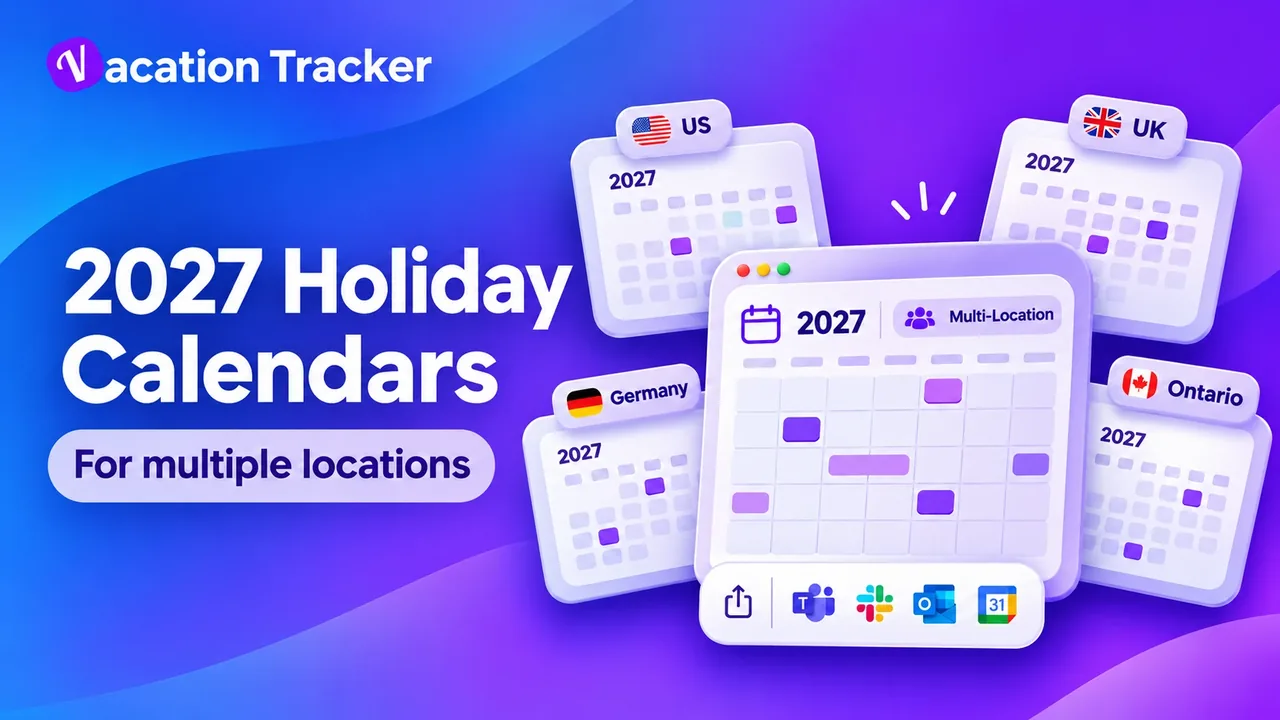
For offices in New York, Chicago and Los Angeles, build a holiday calendar for each location instead of sending everyone one national list. Assign calendar owners for locations and sub-locations; plan coverage for departments and sub-departments.
A floating holiday lets employees choose a day, such as MLK Day, Presidents' Day or Juneteenth, when it isn't already a company holiday.
Decide the substitute day per location for weekend holidays. In 2027, Juneteenth falls on Saturday and July 4 on Sunday. The Christmas and New Year's weekend dates need the same decision. Tell payroll which actual date to use.
2027 holiday dates for US employers
The OPM schedule supplies the federal dates below. The day after Thanksgiving and Christmas Eve are included as company choices, not separate permanent federal holidays.
| Holiday | Date | Day | Observed if on a weekend |
|---|---|---|---|
| New Year's Day | Jan 1 | Fri | Same date |
| MLK Day | Jan 18 | Mon | Same date |
| Presidents' Day (Washington's Birthday) | Feb 15 | Mon | Same date |
| Memorial Day | May 31 | Mon | Same date |
| Juneteenth | Jun 19 | Sat | Fri, Jun 18 |
| Independence Day | Jul 4 | Sun | Mon, Jul 5 |
| Labor Day | Sep 6 | Mon | Same date |
| Columbus Day | Oct 11 | Mon | Same date |
| Veterans Day | Nov 11 | Thu | Same date |
| Thanksgiving | Nov 25 | Thu | Same date |
| Day after Thanksgiving | Nov 26 | Fri | Not federal |
| Christmas Eve | Dec 24 | Fri | Not separately federal; observed Christmas |
| Christmas Day | Dec 25 | Sat | Fri, Dec 24 |
| New Year's Day 2028 | Jan 1, 2028 | Sat | Fri, Dec 31, 2027 |
Private employers choose their own observed days; the federal rule shown is for most Monday-to-Friday federal employees.
Holiday pay policy checklist
Download as PDFWhich days
Who's eligible
How you pay
Want it in writing? Our free holiday pay policy template covers all of this. Fill in the brackets and share it with your team.
Set paid holidays for each location in Vacation Tracker
Vacation Tracker lets teams request, approve and track time off in Microsoft Teams, Slack and Google Workspace, with a holiday calendar for each location.
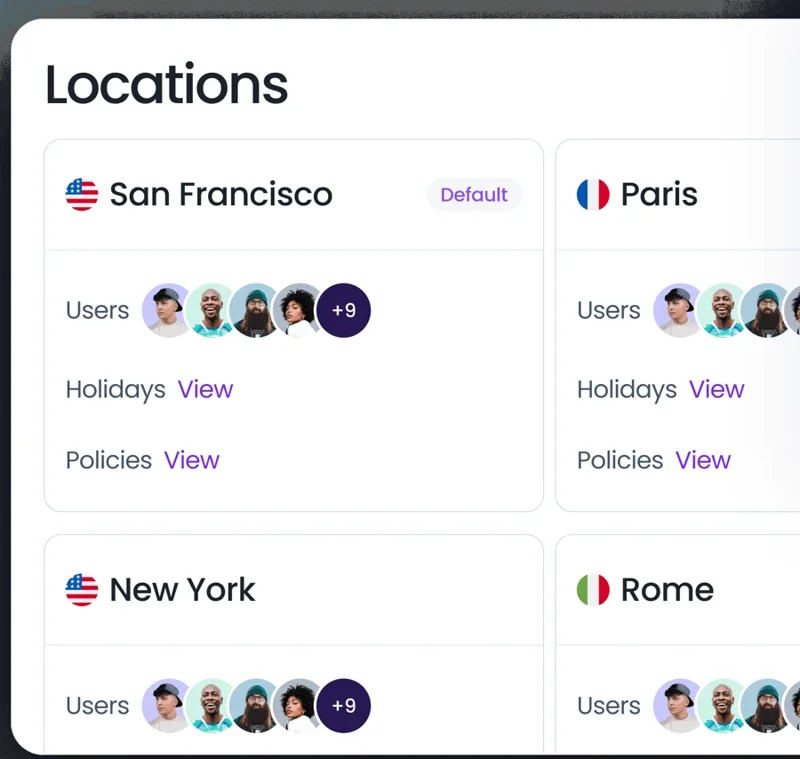
- Expand Leave Setup and click Locations. Open the location you're setting up.
- Open its Holidays tab, select 2027, then click Import Holidays. Choose the country and state, import the days you pay, and remove any days you don't.
- Use Add a Holiday for custom days such as Christmas Eve or the day after Thanksgiving. You can also set a half-day holiday.
- Employees see their location's holidays in Microsoft Teams, Slack or Google Workspace, and holidays never come off their PTO balances.
Or let your AI set it up. With the Vacation Tracker MCP connector, you can ask Claude, ChatGPT or Copilot to do it for you: "Add Christmas Eve and the day after Thanksgiving as 2027 holidays for our New York and Chicago offices."
For last-week-of-December coverage, use Blackout Period to block leave on selected dates or Maximum Users Away to cap simultaneous absences.
Every office gets one holiday calendar people can see, and nobody keeps a spreadsheet of who's paid for what. Try Vacation Tracker free for 14 days and have every location's 2027 holidays set before January.
Manage leave across all your locations
Leave policies and public holidays for every office, state or country, in Microsoft Teams, Slack or Google Workspace.