
Year-end PTO looks like one job: reset the balances on January 1.
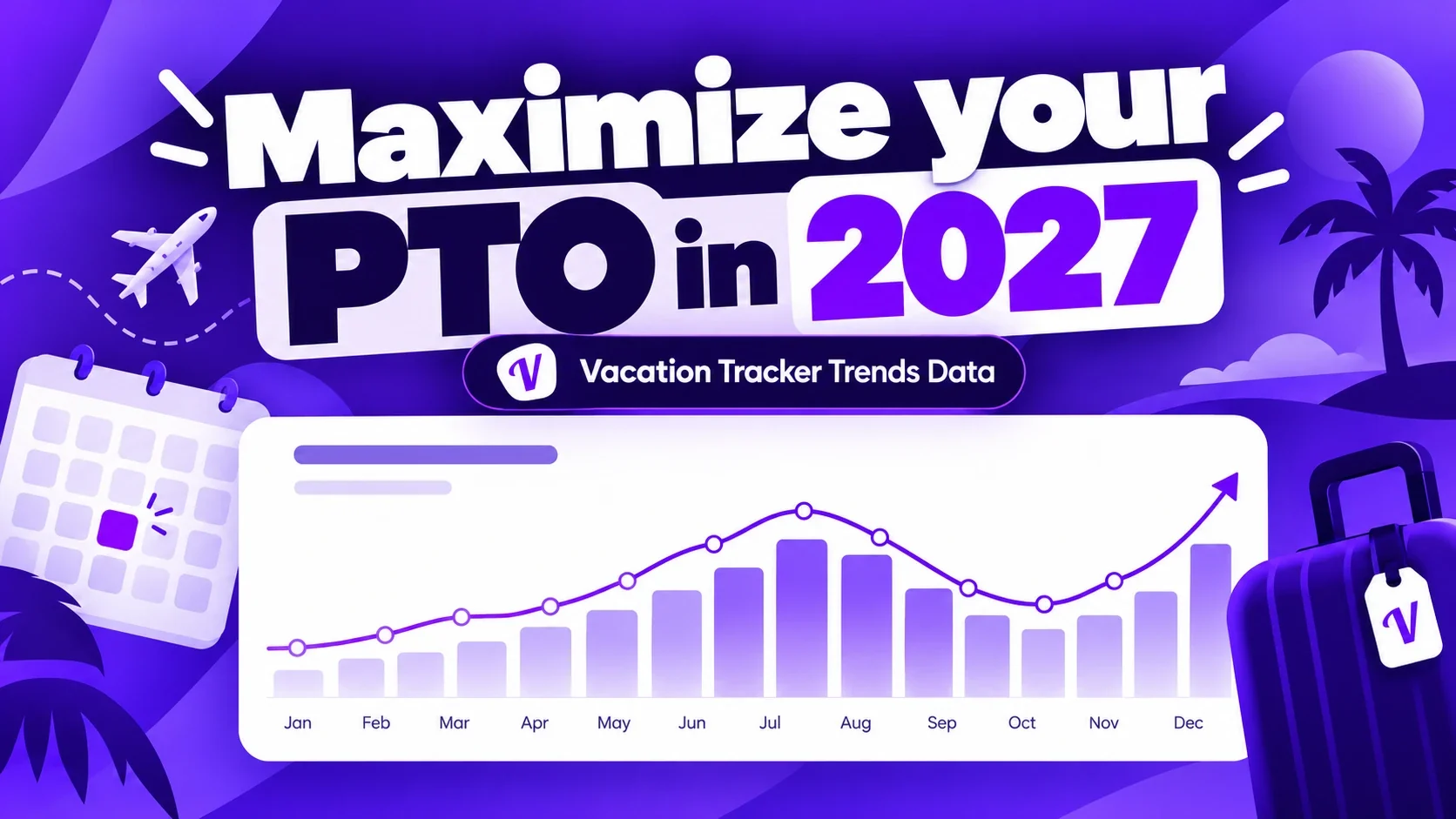
Here's the catch: it takes six weeks of decisions, with different rules in each office. In our data, December holds about 1 in 7 of the year's vacation days; December 21 to 31 alone holds about 1 in 10.
Leave those decisions late and unused days become disputes, three colleagues request December 27 off, and HR spends the month answering balance questions. Decide the rules in November, and employees can book around them.
Start with unused PTO by location, work through December requests and Christmas coverage, then prepare the January reset. There's a checklist at the end.
Why year-end PTO gets harder with every office you add
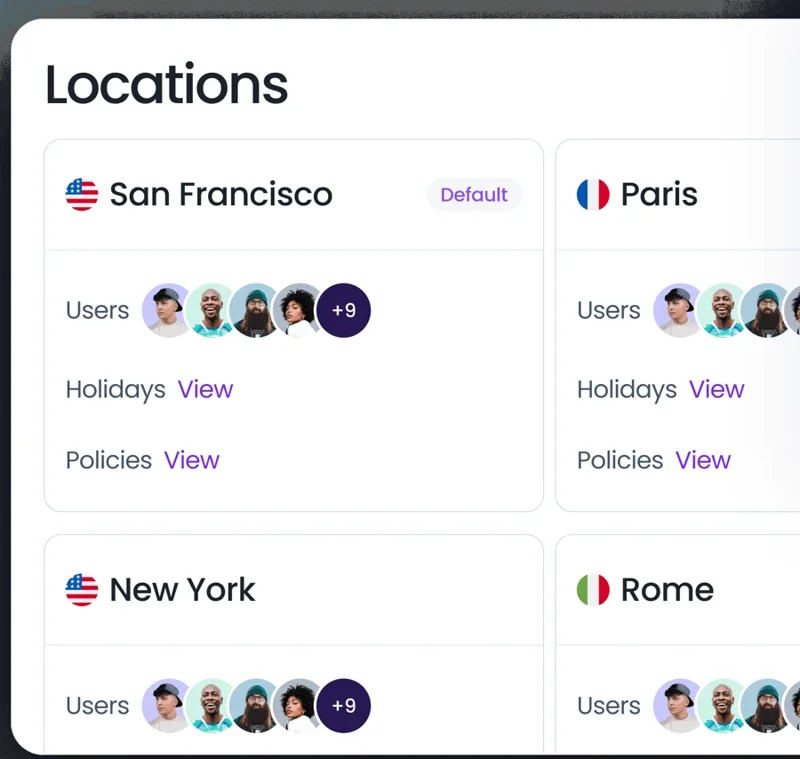
Each office adds another holiday calendar, leave allowance or busy period to coordinate. A company-wide December deadline can help managers plan, but employees still need the unused-leave rules for their own location.
Our Leave Trends report found that 88% of multi-location companies run two or more holiday calendars, and 64% give locations different allowances.
In our data, December accounts for about 22% of the year's vacation in Australia, where it's summer, versus 18% in Germany, 16% in the US and 14% in Canada and Poland, so one December coverage plan won't fit every office.
The table shows the share of each year's vacation days that fell in December, by the country of the company, with the three-year average in the last column.
| Country | 2023 | 2024 | 2025 | Average |
|---|---|---|---|---|
| All companies | 14.6% | 15.3% | 15.4% | 15.1% |
| United States | 15.5% | 15.5% | 15.9% | 15.6% |
| Canada | 14.2% | 15.0% | 14.4% | 14.5% |
| United Kingdom | 13.9% | 14.5% | 14.9% | 14.4% |
| Ireland | 16.3% | 18.9% | 18.6% | 17.9% |
| Germany | 13.7% | 18.4% | 17.8% | 16.6% |
| Netherlands | 13.8% | 16.8% | 15.5% | 15.4% |
| France | 13.6% | 14.4% | 17.8% | 15.3% |
| Spain | 18.1% | 18.0% | 15.9% | 17.3% |
| Poland | 14.2% | 14.5% | 13.9% | 14.2% |
| Switzerland | 15.6% | 17.6% | 14.6% | 15.9% |
| Sweden | 13.5% | 13.1% | 18.0% | 14.9% |
| India | 16.2% | 17.3% | 17.1% | 16.9% |
| Australia | 16.6% | 19.5% | 22.0% | 19.4% |
Assign an owner in each office. Have that person resolve local policy questions while department managers handle coverage. For the wider setup, see how to manage leave across multiple countries.
Does PTO reset every year?
Not automatically. PTO resets on the date your policy sets: January 1, another leave year or each employee's work anniversary. A new allowance doesn't wipe out the old balance either. What happens to unused days depends on your policy and on the law where each employee works.
| Reset type | How it works | Common where |
|---|---|---|
| Calendar year | New allowance starts January 1 | Policies organized around January to December |
| Fiscal or leave year | New allowance starts on another fixed date | Leave and budgeting years match |
| Work anniversary | Each employee has a separate reset date | Entitlement follows the hire date |
The US Department of Labor says the FLSA does not require paid vacation. In the UK, employers should communicate the statutory leave year's dates when employees start.
Record each office's fiscal year start date separately from its carryover deadline. They answer different questions: when new entitlement starts, and how long old days remain available.
What happens to unused PTO at the end of the year?
Unused PTO can carry over, expire under a use-it-or-lose-it rule, or be paid out. Which of those you can use depends on the law where each employee works. Separate statutory leave from extra company days first, then set caps and expiry dates for each.
| Option | How it works | What to decide |
|---|---|---|
| Carryover | Moves unused days into the next leave year | Permitted cap and expiry date |
| Use it or lose it | Expires eligible unused days | Whether expiry is lawful and notice requirements are met |
| Payout | Pays for eligible unused days | Eligibility, rate and payroll date; estimate with the PTO payout calculator |
| A mix | Treats statutory and extra days separately | Which rules apply to each balance |
Carryover needs its own balance record so employees can see which days to use first.
Year-end rules by location (examples)
| Location | Can unused leave be lost? | Notes |
|---|---|---|
| California, US | Earned vacation cannot be forfeited | It is wages; reasonable accrual caps are allowed. California DLSE |
| UK | Yes, with exceptions | 5.6 weeks a year. Carryover is allowed if the contract says so, and protected in set cases such as sickness, family leave or an employer that didn't let the worker take it. Acas |
| Germany | Only if the employer prompted and warned the employee (see reminders below) | Leave generally belongs in the calendar year; urgent operational or personal reasons permit carryover through March 31 of the next year. BUrlG §7(3) |
| Netherlands | Statutory days normally expire six months after the earning year ends | Exceptions apply if the employee could not take leave; a longer period can be agreed. Dutch government |
| Ontario, Canada | No, it has to be scheduled | Vacation normally must be taken within 10 months after the entitlement year ends. Ontario ESA guide |
| Australia | Unused annual leave rolls over | Annual leave accumulates from year to year. Fair Work Ombudsman |
Use the PTO rollover guide for US state rules and the guide to use-it-or-lose-it vacation policies in Canada for provincial differences.
Can an employer make employees use PTO before the end of the year?
Often, yes, as long as you follow local notice rules. In California, employers can control when vacation is taken. In the UK, employers can set holiday dates with notice. In the EU, employers must give people a real chance to take their leave before it can expire. The most common use is a Christmas shutdown.
In the UK, the default notice is at least twice the length of the required leave; contractual notice rules can differ. For Australian offices, directions depend on the applicable award or agreement.
Announce a Christmas shutdown early. Calculate deductions using each office's working days and holiday calendar, and resolve insufficient balances before employees book travel.
Remind people about unused days before they expire
Send personal balance reminders in November, again in early December, and once before the relevant expiry date. Leave enough time between the final reminder and expiry for someone to book and actually take the days.
In the EU, CJEU case C-684/16 establishes that statutory leave cannot automatically lapse unless the employer enabled and encouraged its use and warned, in good time, that it would be lost. Reminders belong in that process.
Include:
- Days remaining after approved bookings.
- Days eligible to carry over and any expiry date.
- How to book, including the request deadline.
Ask managers to help people find available dates. An expiry warning is little use when every request comes back denied. Keep a record of notices and the alternatives offered.
How to handle too many time-off requests in December
Set minimum cover for each team, publish a request deadline, and decide how competing requests will be ranked before approving them. Review coverage by skill and shift as well as headcount: two people available is not enough if neither can handle the work that must continue.
Our Leave Trends report shows week 52 is the busiest week, accounting for 6.3% of the year's vacation days, more than three times an average week.
In our data, December vacation is booked a median of about 20 days ahead versus 12 for other months, so publish deadlines and coverage rules by early November.
- Set minimum cover per team. Name the duties that must stay covered, including any handover between offices.
- Set a request deadline. Give managers a decision date too, so employees can make arrangements.
- Publish a priority rule. Use the Christmas allocation methods below for competing requests.
- Cap simultaneous absences. Apply the cap to the department or sub-department that shares the work.
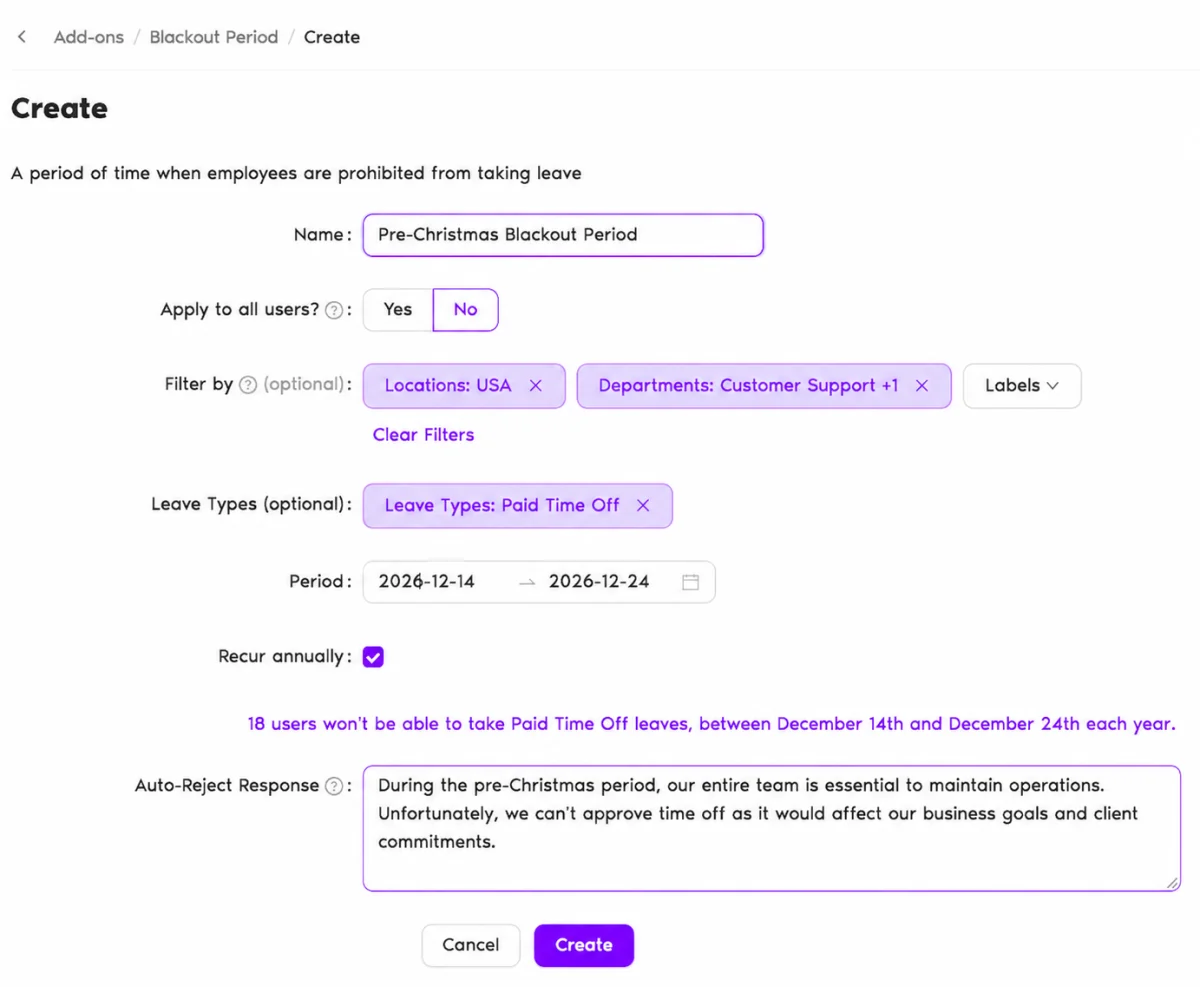
- Block dates that cannot move. Limit a holiday blackout period to the team that needs it, such as Customer Support in the run-up to Christmas.
- Allow swaps. Recheck skills and coverage before approving the replacement dates.
- Explain denials in writing. State the coverage gap and suggest dates the employee can take instead.
If you're already in mid-November, publish the remaining availability now rather than retroactively changing the rules for approved leave. A shared calendar helps managers avoid scheduling conflicts before approving another request.
Who gets Christmas off? How to decide fairly
Publish one priority rule before Christmas requests open, then apply it consistently across offices while respecting local requirements. Volunteers first, then a yearly rotation for the dates everyone wants, works best: the same people don't miss out every year because someone else booked first.
| Method | How it works | Best when |
|---|---|---|
| Volunteers first | Ask who prefers to work | Employees want different days off |
| Yearly rotation | Give this year's Christmas workers priority next year | The same dates fill up annually |
| First come, first served | Order requests by submission time within a published window | Timing is an agreed priority |
| Seniority as a tie-breaker | Use tenure only after the main criteria | An agreed policy uses service to resolve ties |
| Lottery | Draw between genuinely tied requests | Coverage and priority are otherwise equal |
| Split shifts | Share Christmas Eve or Christmas Day, and New Year's Eve or New Year's Day | Shorter shifts still meet coverage needs |
Rotate around each office's own peak days. Offices in different countries may place different importance on Christmas Eve, Christmas Day or New Year.
Keep last year's allocation for next year's rotation. Give employees visibility into who's out, not the personal reasons behind an absence, and avoid asking managers to judge whose holiday plans matter more.
The January reset, office by office
Load next year's holidays before January 1, apply the correct carryover and expiry rules, and show each employee their new balance. Only reset locations whose leave year actually starts then.
Start with the 2027 US holiday calendar and 2027 Canadian holiday calendar, then select the holidays each office observes. Review local working weeks before counting days for requests that cross into January.
Reconcile December approvals, cancellations and taken leave before carrying balances forward. Show carried days separately from new entitlement, with their own expiry dates, so employees know what they can book.
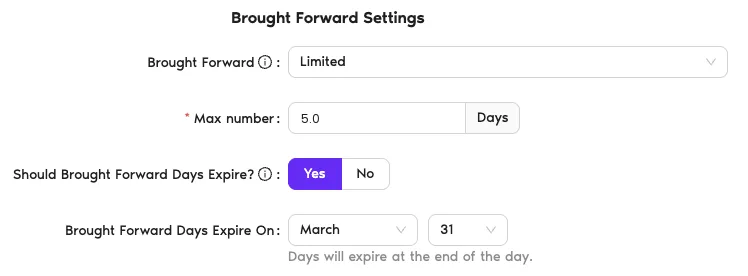
For the setup, follow how brought forward leave works across locations. If January 1 is also your switch date, use the guide to switching leave-tracking systems to move the records you'll need and avoid duplicate deductions.
Ask each location owner to review the opening balances before payroll uses the report.
Year-end PTO checklist
Download as PDFNovember
December
January
How to handle year-end PTO in Vacation Tracker
Vacation Tracker lets you request, approve and track leave with policies and holidays set by location. Use it on its own or alongside an HR or payroll system: the year-end gap is often applying advanced leave rules consistently, even when balances already have a home.
Apply your year-end rules automatically
Set the rules for the locations and departments they belong to:
Blackout Period: a Pre-Christmas Blackout Period stops Customer Support in your US offices from booking PTO between December 14 and 24, every year. Anyone who tries gets an automatic reply that explains why.
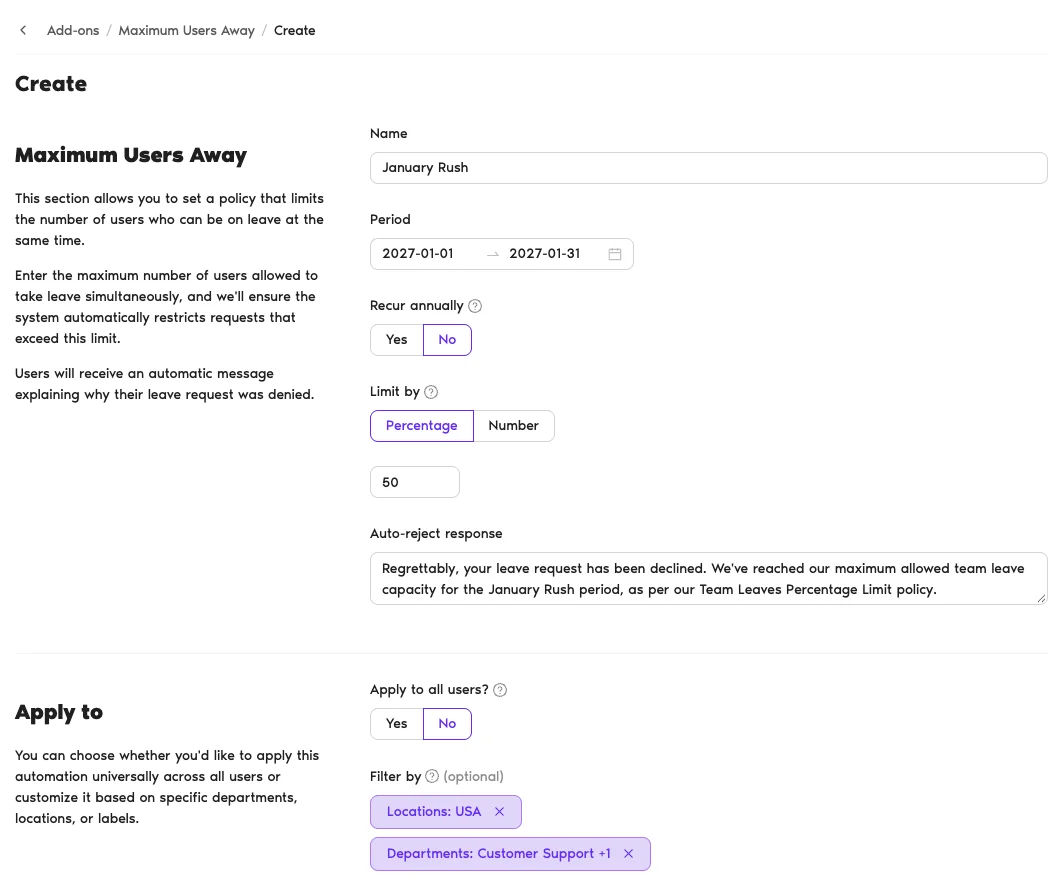
Maximum Users Away: a January Rush rule keeps at least half of US Customer Support at work from January 1 to 31. Once 50% of the team is off, new requests are declined with your message.
Leave Request Notice Period: require two weeks' notice for December requests.
Brought Forward with expiry dates: carry eligible unused days into the new leave year using each location's cap and deadline.
Every office automatically applies the rules assigned to it.
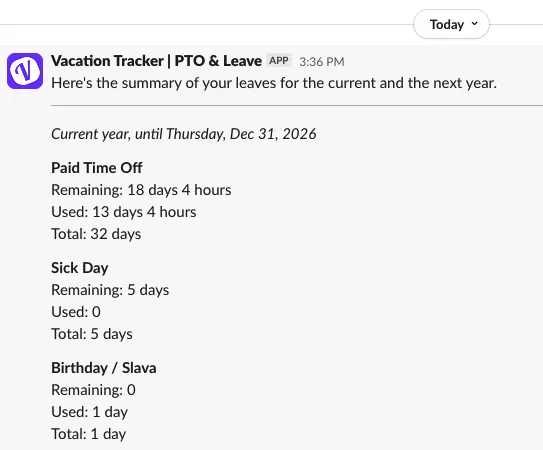
Employees check their own balances in Microsoft Teams or Slack, instead of asking HR to look them up.
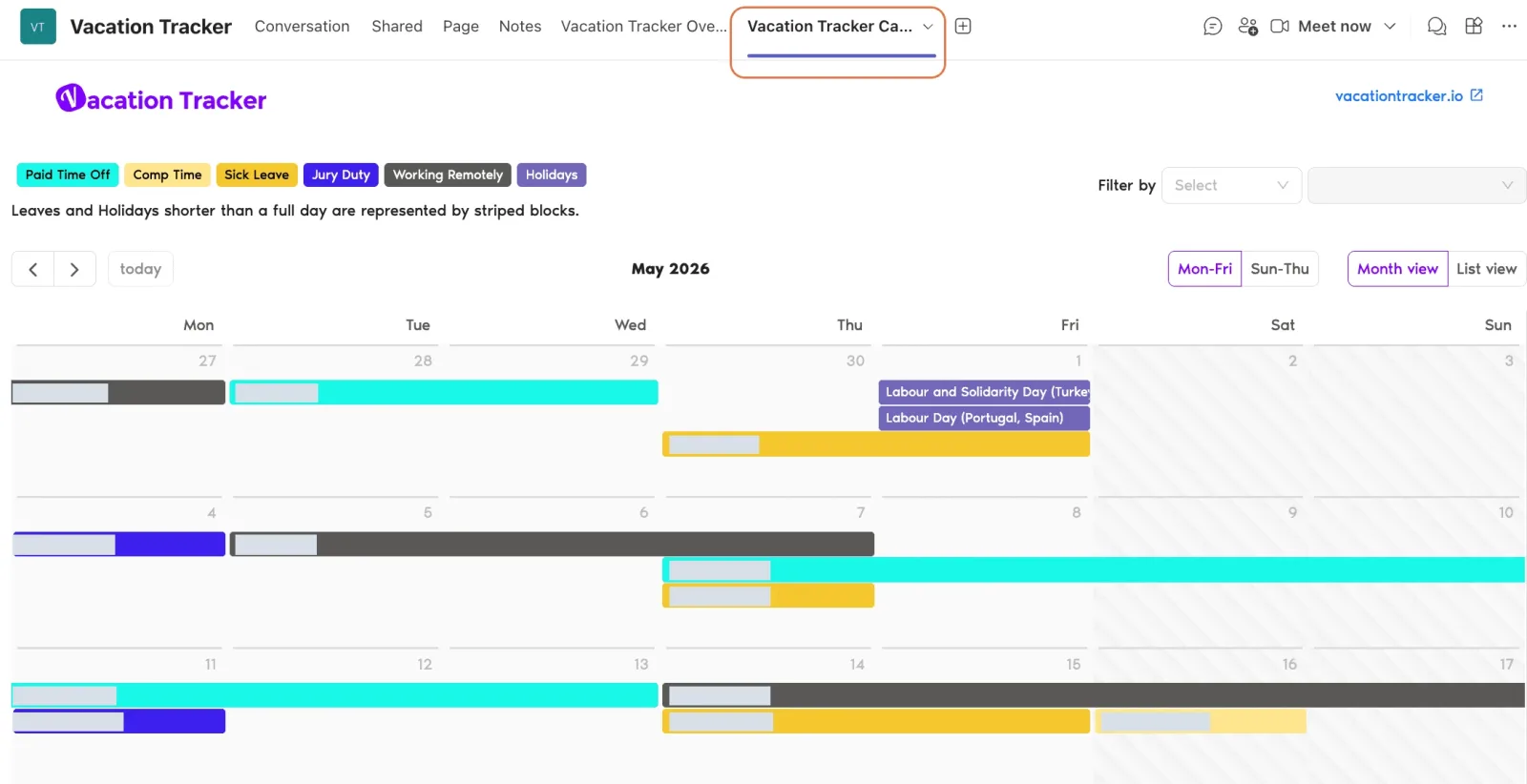
Daily and weekly who's-out summaries go to a Microsoft Teams or Slack channel, or by email for Google Workspace and email teams. Approved leave syncs to Google Calendar and Outlook.
Approvals move faster there too: our Leave Trends report found a median of 32 minutes for requests approved in chat, against 152 minutes outside chat.
For a balance review, ask Claude, ChatGPT or Copilot Studio who still has unused days in the Berlin office through the Vacation Tracker MCP connector. Access follows your role and visibility permissions.
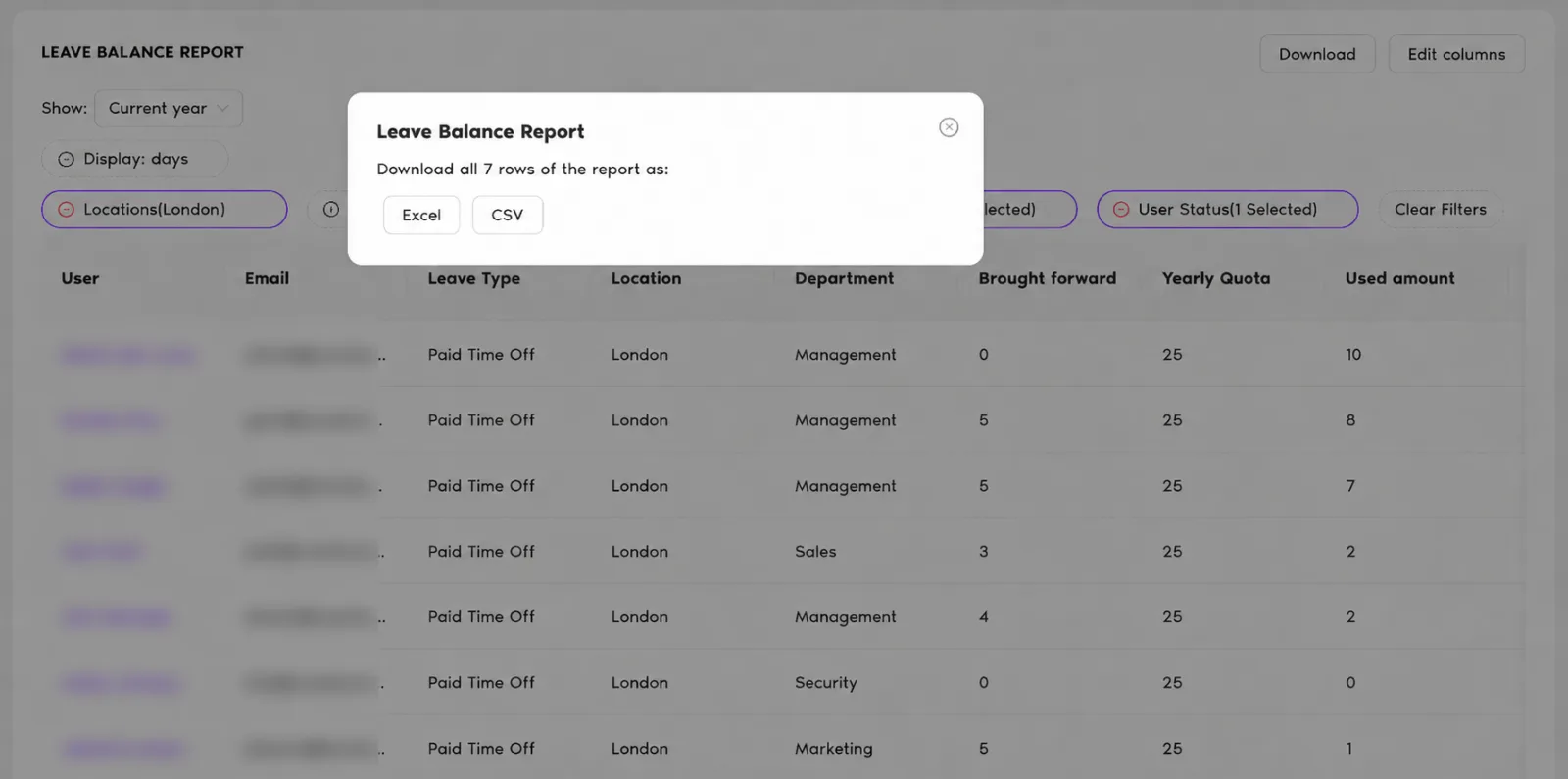
Export the leave balance report by location for year-end payroll.
Set the rules once per location, then handle December requests where your team already works. Start with a 14-day free trial.
Manage leave across all your locations
Leave policies and public holidays for every office, state or country, in Microsoft Teams, Slack or Google Workspace.