

There's a number on your balance sheet that people tend to forget about: the time off your team has already earned but hasn't taken yet. That's your PTO liability, and it's a real debt. If everyone cashed out their balance tomorrow, you'd have to pay it.
Here's how to calculate it, with a simple formula and a 50-person example from our free PTO liability calculator. I covered all of this in a video, so go ahead and watch it first:

Watch: How To Calculate PTO Liability For Your Company
What Is PTO Liability?
PTO liability is the dollar value of paid time off your employees have earned but not yet used. It's what you'd owe if everyone cashed out their balance today, and under US GAAP (ASC 710) it goes on your balance sheet as a liability. It grows a little every workday, as people earn more time off.
"If everybody cashed out tomorrow, as unlikely as that is, you would still have to pay it."
You'll also see it called accrued PTO liability or accrued vacation liability. Our glossary has the full definition of leave liability.
The PTO Liability Formula
PTO liability = unused PTO days per employee × daily rate × number of employees
Daily rate = annual salary ÷ working days per year
For hourly teams, use unused hours × hourly rate instead.
The calculator works with team-wide averages, which is the fastest way to get a ballpark. The precise version takes each person's balance times their own rate, added up. That's the number accountants actually book.
Worked Example: PTO Liability for a 50-Person Company
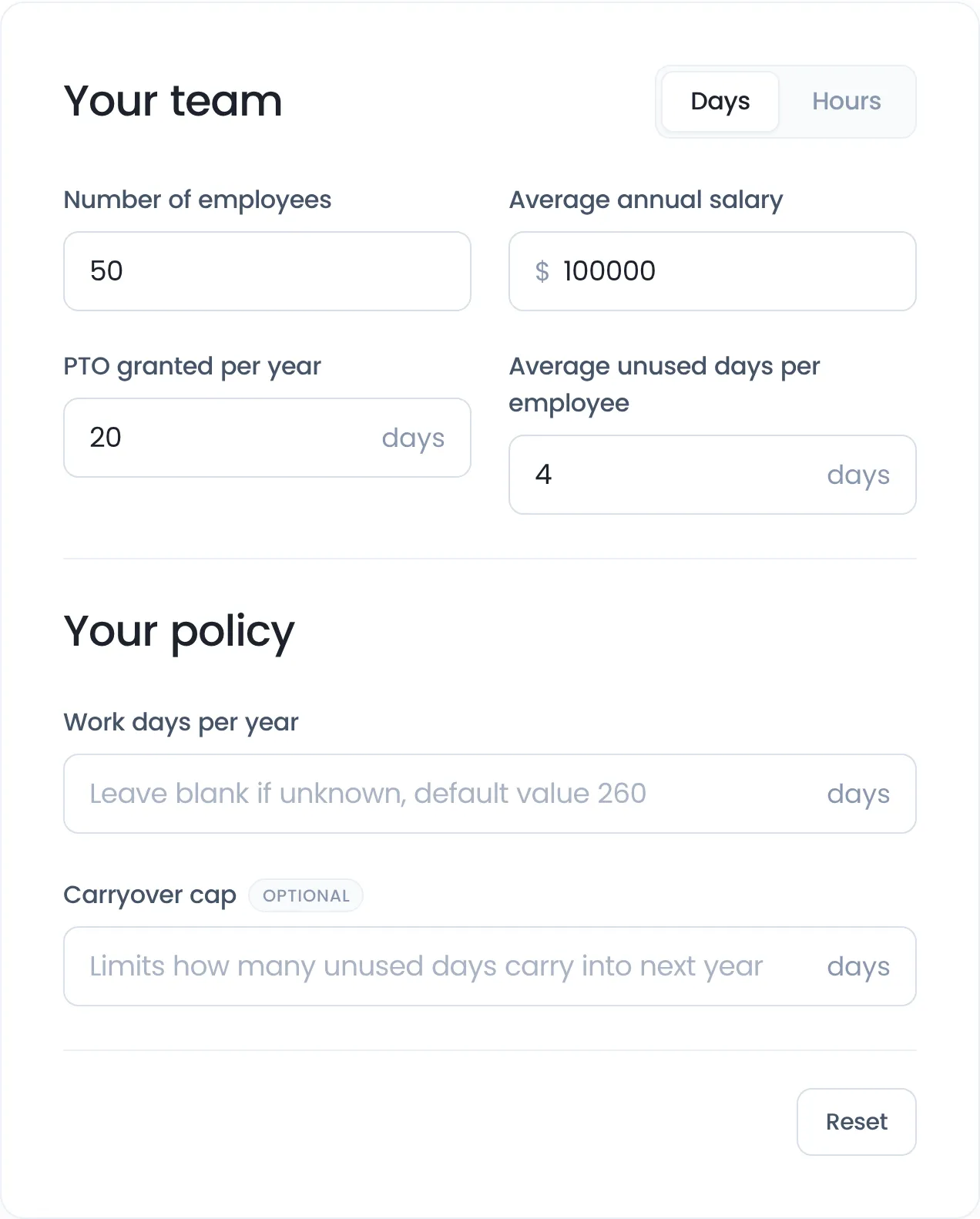
Here's the example from the video: a 50-person company with an average salary of $100,000. Everyone gets 20 days of PTO a year, and on average people end the year with 4 days unused.
The calculator divides salary by 260 working days by default (52 weeks × 5 weekdays). Paid holidays aren't subtracted, because they're still paid days. If your team works a different schedule, use your own number.
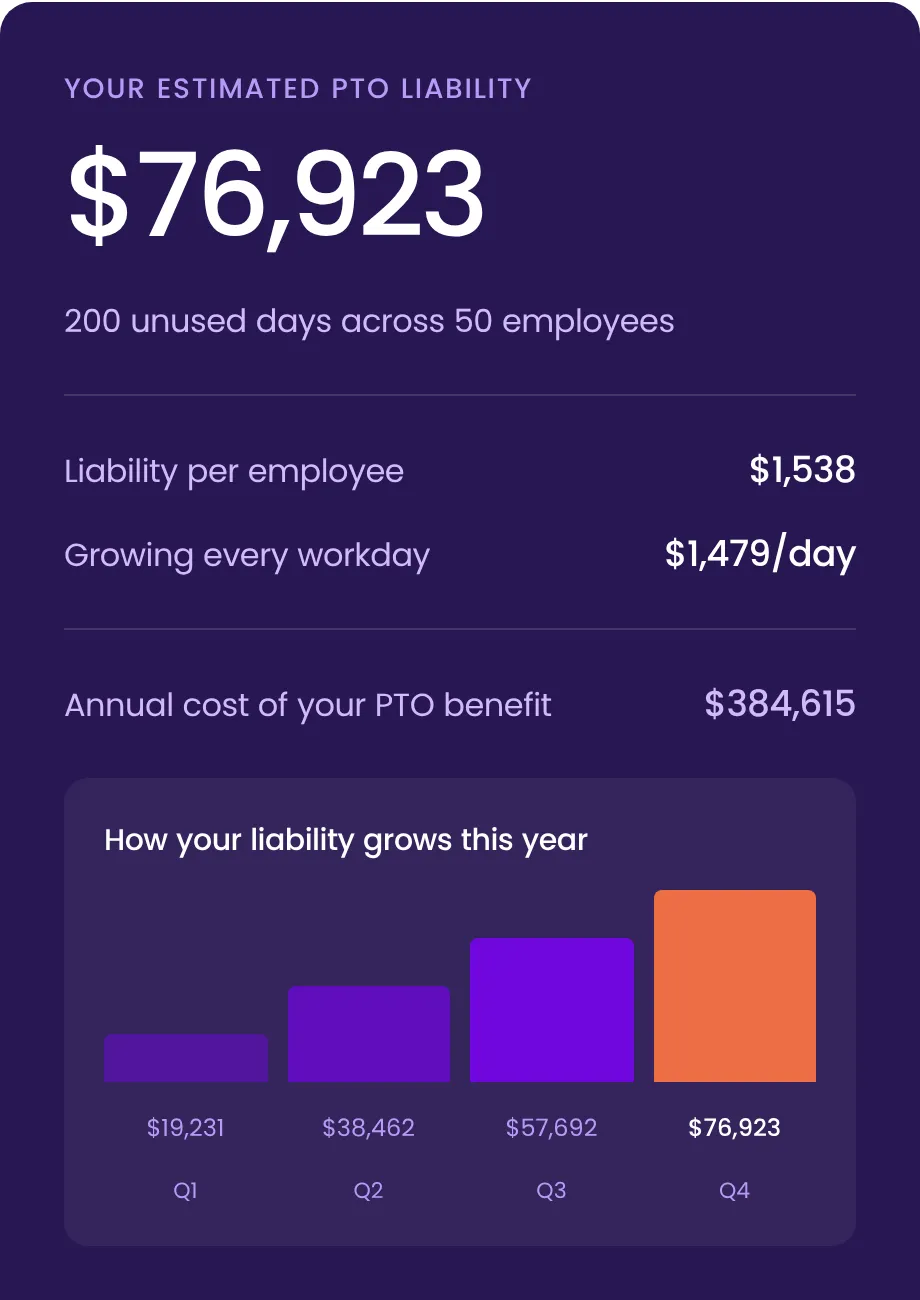
| Output | Value |
|---|---|
| Daily rate | $384.62 |
| Total PTO liability | $76,923 |
| Liability per employee | $1,538 |
| Annual cost of the PTO benefit | $384,615 |
How it's calculated:
- Daily rate: $100,000 ÷ 260
- Total PTO liability: 4 × 50 = 200 unused days × $384.62
- Liability per employee: $76,923 ÷ 50
- Annual cost of the PTO benefit: 20 × 50 × $384.62
"The reason that there's 76,000 left over at the end is because on average people are leaving 4 days on the table."
Plug your own numbers into the free PTO liability calculator. It takes about two minutes.
How a Carryover Cap Changes Your PTO Liability
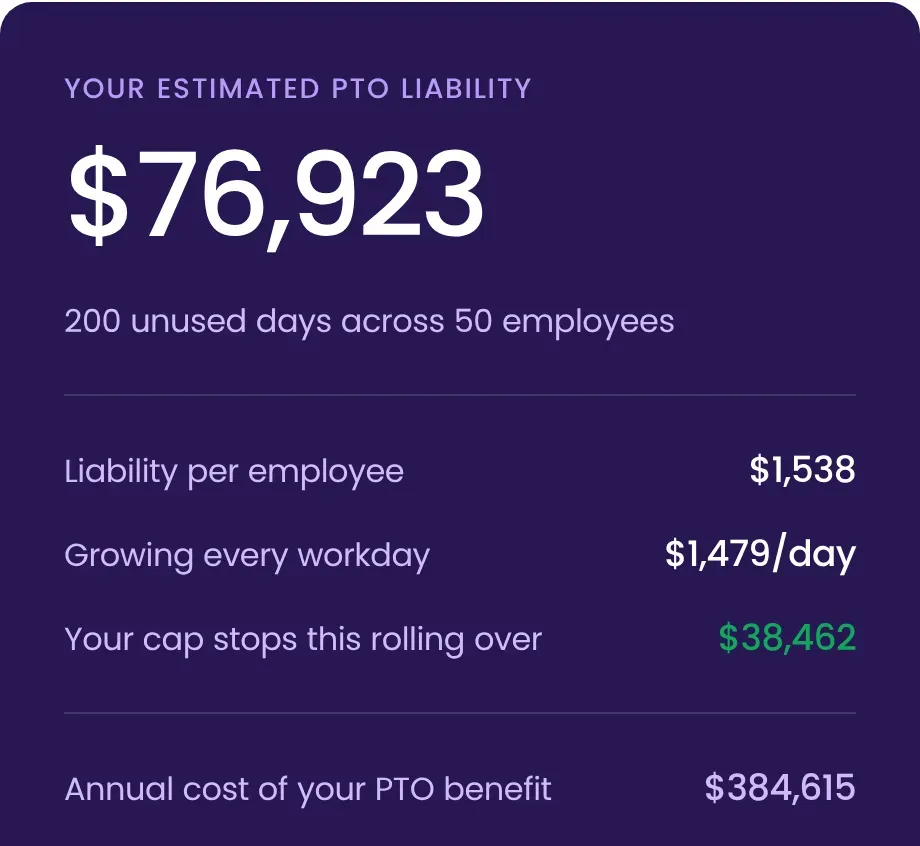
Add a carryover cap of 2 days to the same example. People leave 4 days on the table, but only 2 can roll into next year. That's $38,462 a year that stops carrying forward.
"It's a good lever to play with because it can protect your downside."
The cap doesn't lower what you owe today, though. It limits what carries into next year. And in states that treat earned vacation as wages, like California and Colorado, you can't wipe out days people already earned. There, use an accrual cap instead, so people stop earning once they hit the limit. Our guide to PTO payout laws by state has the details.
What the Calculator Leaves Out
- Real balances. It's an estimate based on averages, not each person's balance and pay rate.
- Sick leave. Separate sick leave usually doesn't count, but a combined PTO bank does.
- Location rules. Payout rules differ by state and country. Check yours on our leave laws pages.
- Payroll taxes and benefits. Add them if your accountant includes them.
This post is general information, not legal or accounting advice.
Use-It-or-Lose-It vs. Unlimited PTO
If you want to change the number structurally, you have two levers.
Use-it-or-lose-it clears unused balances at year end, where it's legal. The liability still builds during the year, though, and it's banned in California, Colorado and some other states.
Unlimited PTO mostly removes the liability, because nothing accrues. The trade-off is culture:
"The main trade-off… is that people will either abuse it and take too much time off, or you'll start to have a company culture where people take less time off."
If you switch, honor existing balances first, and put the policy in writing. More in our unlimited PTO policy guide.
How to Track Your Real PTO Liability
"Doing this all in a spreadsheet would kind of suck."
Vacation Tracker keeps every employee's real balances by leave type and location. To get to the liability, export the leave balance report and multiply each balance by that person's pay rate. Or connect Claude, ChatGPT or Copilot through our MCP integration and ask it to do the math for you.
Calculate Your PTO Liability in Two Minutes
Run your numbers in the free PTO liability calculator. If you want the version that runs off your real balances instead of averages, try Vacation Tracker free for 14 days, no credit card needed. Managing PTO for 100+ people? Book a demo.