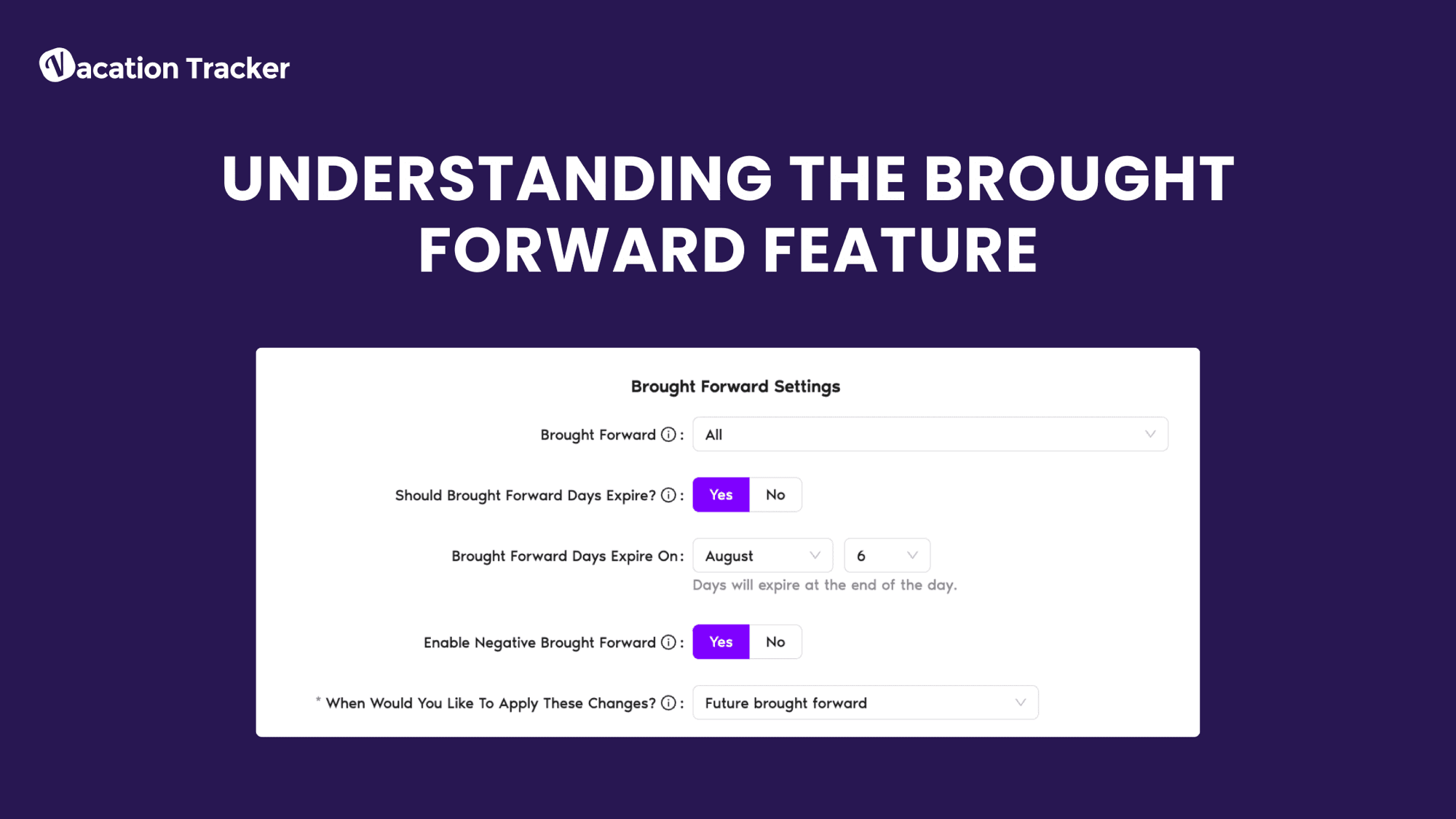
As the year winds down, managing leave effectively becomes a pressing task for teams and organizations alike. Vacation Tracker’s Brought Forward Policy, often called rollover or carryover, is designed to make sure unused leave days don’t go to waste. It’s a practical way to balance employee flexibility with business needs.
Here’s how you can set it up and make the most of it before the new year kicks off.
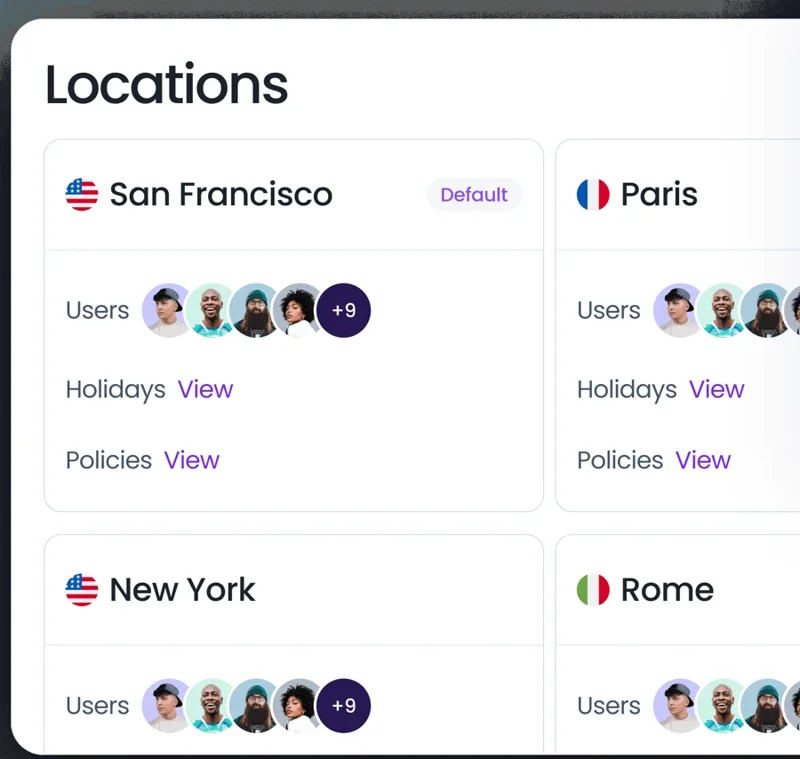
With offices in different states or countries, one rollover rule rarely fits everyone. Your New York team might lose unused days on December 31, while London carries 5 days into March and Toronto has until October to use theirs.
Brought forward means unused leave carried into the next leave year. In Vacation Tracker, you set it per location and leave type: Disabled, Limited or All. You can add an expiry date to carried-over days, and each location's rule runs automatically when its leave year resets.
Prefer to watch? This video walks through three offices with three different rollover rules.

Watch: PTO Rollover: How to Carry Over Unused PTO Automatically (Year-End Setup)
What does brought forward leave mean?
Brought forward leave is unused time off transferred from one leave year into the next. Carryover, rollover and carry forward mean the same thing.
Your brought forward balance is the amount carried in from the previous year. It sits alongside the new year's quota, so employees can see both the days they saved and their fresh allowance.
Brought Forward + Quota − Used = Remaining
For example, 5 brought forward days plus a 25-day quota, minus 2 used days, leaves 28 days remaining.
In Vacation Tracker, Used includes leave already taken and approved upcoming leave for the selected period. That helps explain why an employee who has booked a future vacation already sees those days deducted.
Why the Brought Forward Policy Is Important
Unused leave can cause headaches for both employees and employers. Without a clear policy, you might face operational hiccups, budget surprises, or unhappy team members. The Brought Forward Policy tackles these issues by allowing unused leave days to roll over into the new year for specific leave types.
As the year wraps up, now’s the perfect time to double-check your settings to ensure everything is ready for a smooth transition into the next leave cycle.
Why year-end gets complicated with three or more locations
According to what we're seeing in Vacation Tracker, 63% of companies with more than one location give different time-off allowances in different locations. That's from our Leave Trends report (October 2026).
Rollover rules differ too. Here's our example company with five offices:
- New York: 15 days a year. Unused days are lost on December 31. New York allows this when employees are told the rule in writing.
- London: 25 days a year. Up to 5 days carry over and expire March 31. In the UK, the employment contract sets carryover.
- Toronto: 15 days a year. Up to 10 days carry over and must be used by October 31. Ontario requires vacation to be taken within 10 months after the year ends.
- Los Angeles: all unused days carry over. California doesn't allow earned vacation to be forfeited.
- Austin: up to 5 days carry over, set by company policy. Texas leaves carryover to the employer.
That's why the rule has to live with each location, not company-wide. Our PTO rollover guide lists the rules for every US state and many countries, and our guides to managing leave across multiple countries and multi-state PTO policies go deeper. These are example policies, not legal advice.
Setting Up the Brought Forward Policy
Admins are the ones who can enable this policy, which applies across specific locations. Everyone in a location follows the same rules, but you can decide which leave types qualify for carryover.
Here’s how to set it up:
- Open Leave Setup, then “Locations” in the Vacation Tracker Dashboard.
- Click Edit Leave Policies on the location, then the edit (pencil) icon beside the leave policy.
- Scroll to Brought Forward Settings, choose Disabled, Limited or All, then click Update to save.
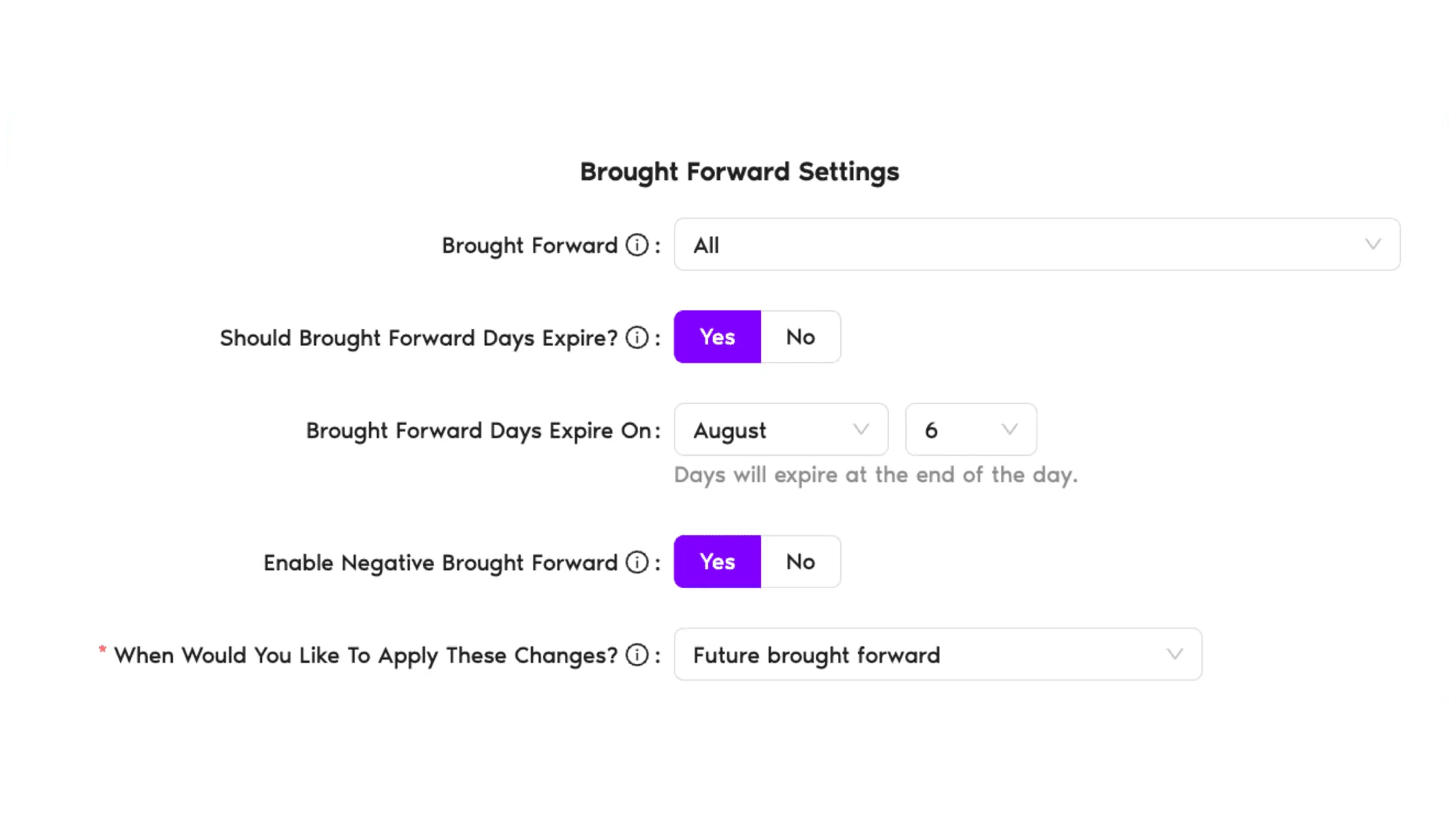
Set different rules for each location
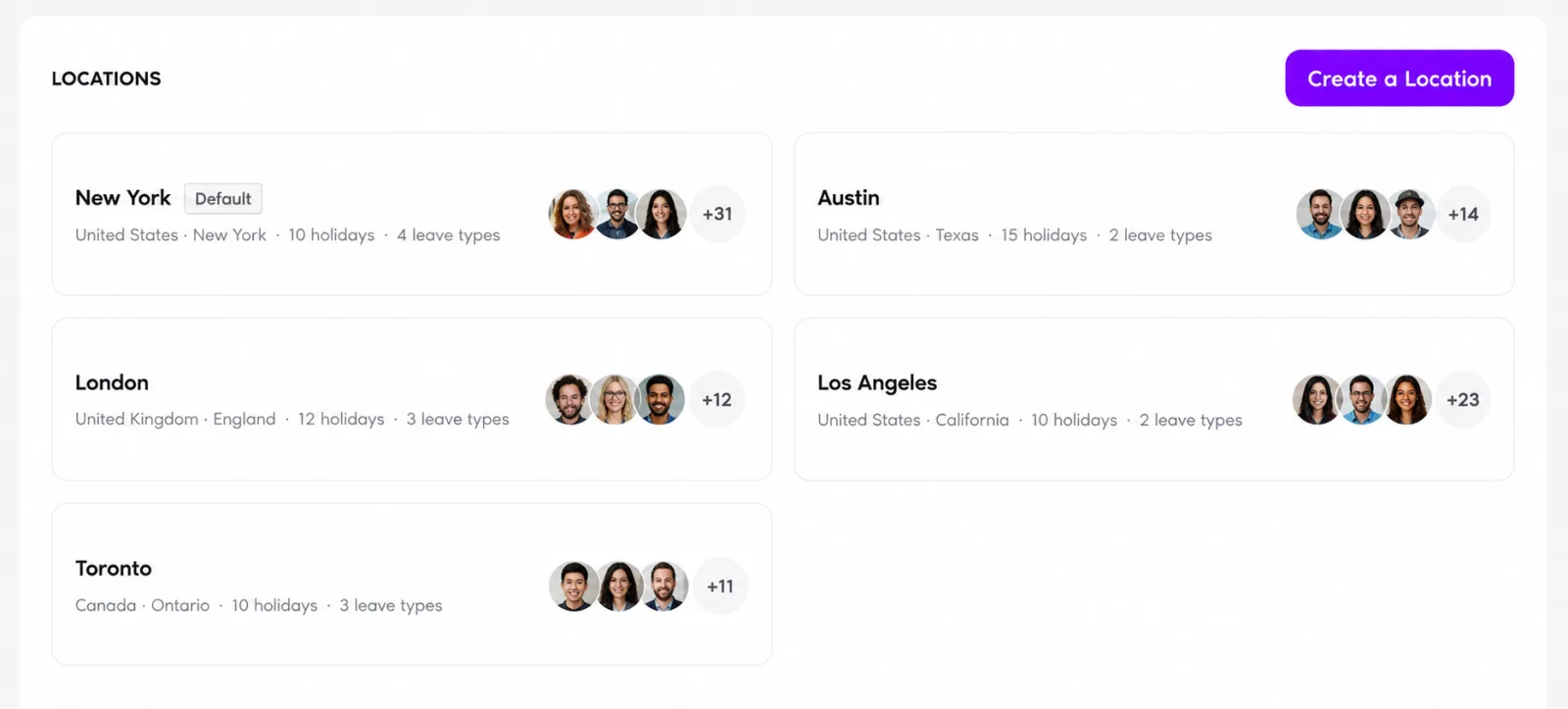
Our example company has five offices, each set up as its own location in Vacation Tracker:
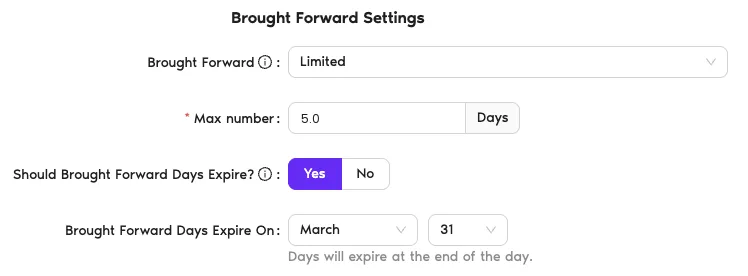
Open London's PTO policy and select Limited. Set the carryover amount to 5 days. Set Should Brought Forward Days Expire? to Yes, pick March 31 in Brought Forward Days Expire On, then click Update.
Repeat for Toronto: choose Limited, enter 10 days and set October 31 as the expiry. Save with Update. For New York, select Disabled and click Update.
Those are three policy edits. With per-location leave settings, each location and leave type has its own Brought Forward Settings. Vacation can carry over while Sick Leave starts fresh at reset.
Watch the setting-by-setting walkthrough:

Watch: How to Set a Rollover Leave Policy with Vacation Tracker
Forgot to turn it on before the year ended?
For a location using an Accounting Year reset, open the policy's Brought Forward Settings and choose Limited or All. Under When Would You Like To Apply These Changes?, choose Previous brought forward and future ones, then click Update.
This brings unused days from the most recently closed leave year into the current balance. For example, applying it in April 2027 brings unused 2026 days into 2027 under that policy. Future brought forward, the default option, applies the rule at upcoming resets.
How Different Policies Work
The Brought Forward Policy is flexible enough to meet various organizational needs. Here are three common approaches:
1. No Brought Forward
Unused leave expires at the end of the year. It’s simple, straightforward, and prevents leave buildup.
Tip: Disable the Brought Forward option if this is your preferred setup. Remember, changes won’t retroactively affect unused days from the current year.
2. Full Brought Forward
All unused leave transfers to the next year.
Example:
Maria has 10 vacation days but only uses 7. Her 3 unused days carry over, giving her 13 days next year.
This approach is employee-friendly but requires some monitoring to avoid excessive leave accumulation.
3. Limited Brought Forward
A middle-ground approach where only a set number of days roll over.
Example:
Alex has 12 annual leave days but finishes the year with 5 unused. His company allows up to 3 days to carry over, so he starts the new year with 15 days (12 new + 3 carried over). The remaining 2 days expire.
How our example company sets it up
Here's how we'd set up the five offices from our example.
| Rule | Setting in Vacation Tracker | Example office | What happens to 10 unused days |
|---|---|---|---|
| No brought forward | Disabled | New York | All 10 are lost |
| Full | All | Los Angeles | All 10 carry over |
| Limited | Limited, cap 5 | Austin | 5 carry over; 5 are lost |
| Limited with expiry | Limited, cap 5, March 31 expiry | London | 5 carry over; use them by March 31 |
| Limited with a longer window | Limited, cap 10, October 31 expiry | Toronto | All 10 carry over; use them by October 31 |
Managing Expiry Dates
One challenge with carryover is preventing excessive leave stockpiling. To address this, you can set expiry dates for rolled-over days. For instance, you might require unused days to be used by March 31.
What happens after the expiry date?
Any unused carried-over days are removed on April 1. This helps employees plan their time off while keeping things flexible for your organization.
How to set it
In Brought Forward Settings, choose Limited or All. Set Should Brought Forward Days Expire? to Yes, pick a month and day, then click Update. Days expire at the end of the chosen day.
Which date to pick
- March 31: the most common choice. Employees get the first quarter to use their days.
- June 30: more time, for teams with busy early-year deadlines.
Where employees see it
On their profile, under Leave Quotas. Like every brought forward setting, expiry is set per location and leave type.
Managing Overused Leave with Negative Brought Forward
Vacation Tracker also supports Negative Brought Forward, allowing businesses to track overused leave by carrying it forward as a negative balance. When employees exceed their leave entitlement within a year or period, the system automatically adjusts their future leave quotas, ensuring transparency and accuracy.
Example:
James has 15 vacation days annually but takes 18 days this year, exceeding his entitlement by 3 days. With Negative Brought Forward enabled:
- These 3 overused days are carried into the new year as a negative balance.
- At the start of the next year, James’s entitlement of 15 days is reduced to 12 days (15 - 3 = 12).
How to turn it on
- Open the leave policy and turn on Allow Negative Balance.
- In Brought Forward Settings, choose Limited or All.
- Set Enable Negative Brought Forward to Yes, then click Update.
If it's off
The deficit is wiped at reset and the employee starts the new year with the full quota. This is the default.
When does the leave year reset?
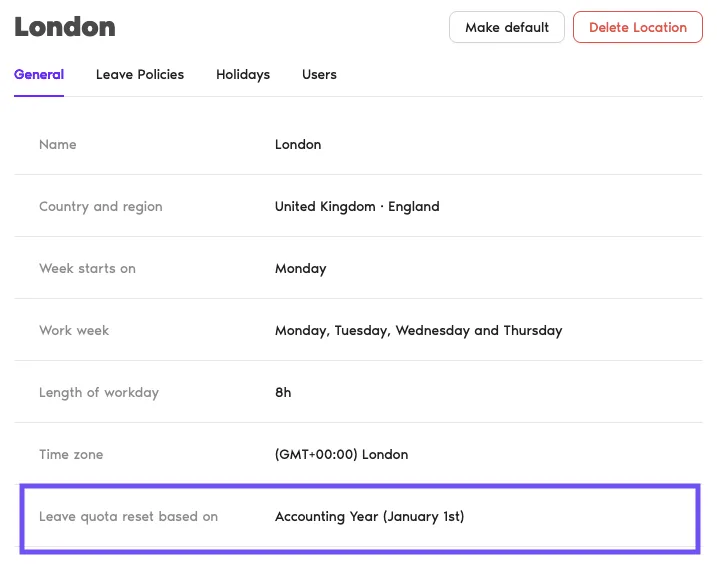
Each location has its own reset date. To set it, open Leave Setup, then Locations, click the location card, and on the General tab click the pencil icon next to Leave quota reset based on. There are two options.
Accounting Year: everyone resets on the same day
Set the date in Year starts on:
- January 1: a calendar year. Our New York, London and Toronto offices all use this.
- Your fiscal year start: for example, July 1.
- Any other date your company uses.
User Employment Date: each person resets on their work anniversary
Someone who started on May 12 gets their new quota, and their rollover, every May 12. Make sure everyone's start date (Employee since) is filled in on their profile first.
On the reset date, the new quota comes in and the location's brought forward rule runs automatically.
What happens on January 1? A worked example
One employee in each office finishes December 31, 2026 with 10 unused days. Say each gets their full yearly quota on January 1 and hasn't booked any 2027 leave yet.
| Office | Yearly quota | Rule | Carried over | Lost | Balance on January 1, 2027 | Use carried days by |
|---|---|---|---|---|---|---|
| New York | 15 days | Disabled | 0 days | 10 days | 15 days | n/a |
| London | 25 days | Limited 5, expires March 31 | 5 days | 5 days | 30 days | March 31, 2027 |
| Toronto | 15 days | Limited 10, expires October 31 | 10 days | 0 days | 25 days | October 31, 2027 |
Vacation Tracker calculates these balances automatically; each office's saved rule runs at reset.
What employees see after the reset
On the web dashboard, employees open My Profile and scroll to Leave Quotas. They choose the leave type to see Brought Forward + Quota − Used = Remaining, along with the expiry date where one is set. Select Period lets them look back at past years.
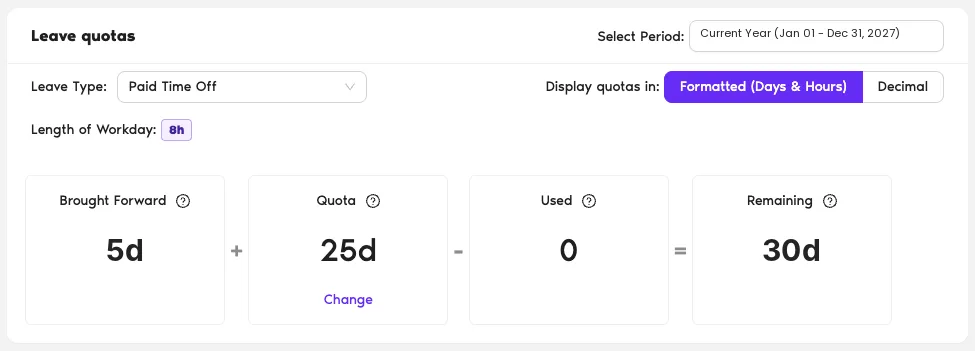
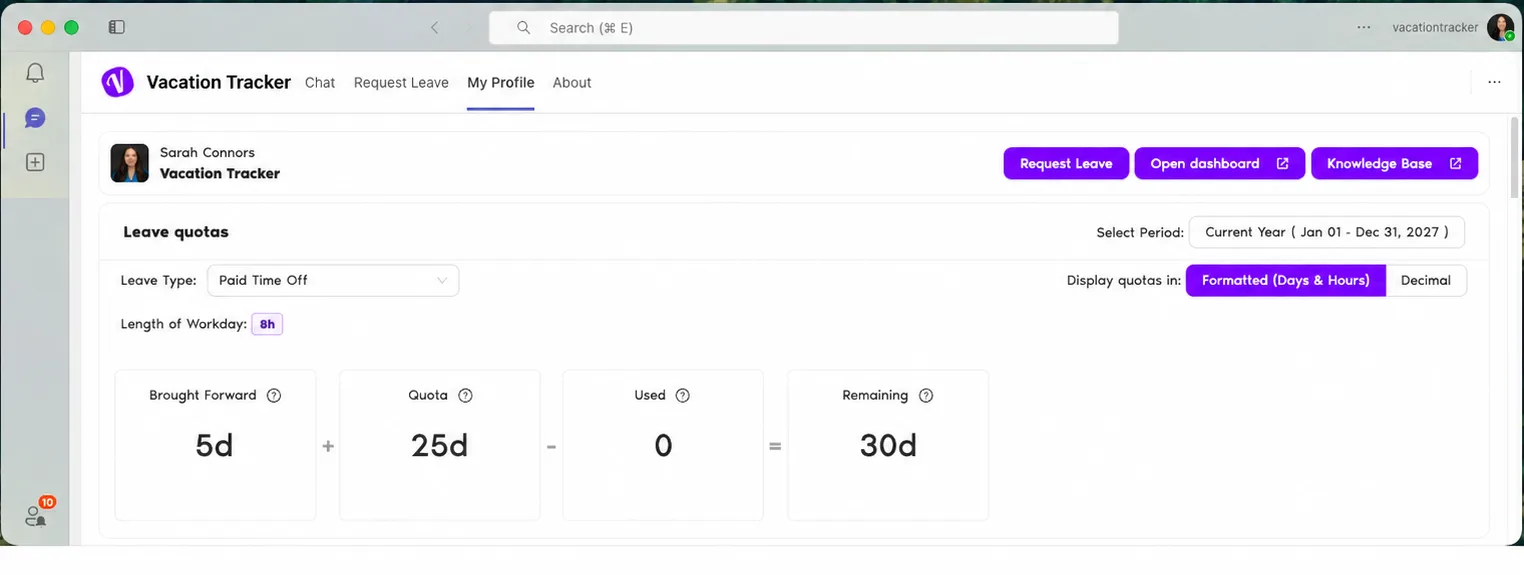
In Microsoft Teams, employees open the Vacation Tracker app's My Profile tab or ask the bot for their balance. They see the same numbers, carried-over days included:
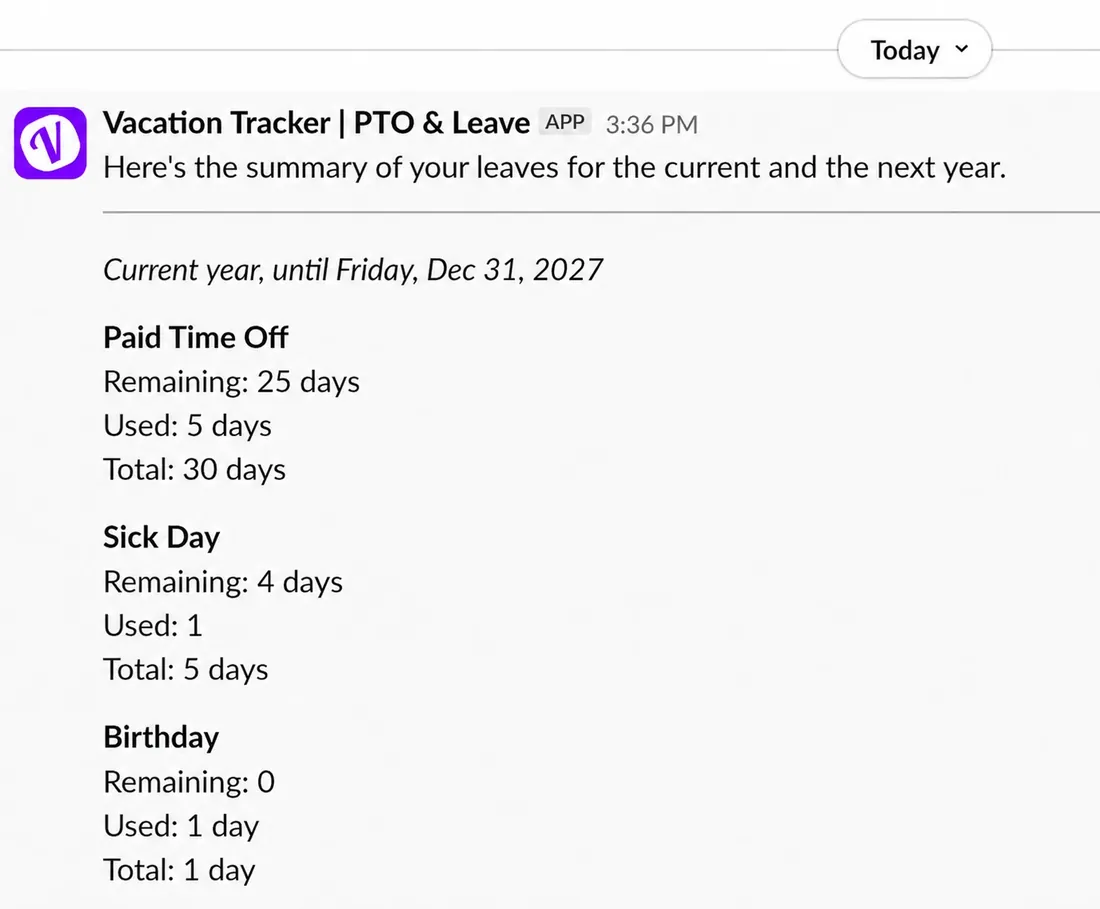
In Slack, they type /vacation and choose My Status to get a summary of every leave type:
Google Workspace teams use the web dashboard, and employees can also check balances in the iOS and Android apps.
A London employee can see the carried-over days alongside the new quota, then check when those days expire before choosing dates. They can answer "How many days do I have left?" themselves instead of messaging HR.
Year-end checklist for HR and operations teams
- List every location and its leave types.
- Check the local rollover rules for each office.
- Set Brought Forward, the cap and any expiry per location and leave type.
- Confirm each location's reset basis: Accounting Year or User Employment Date.
- Decide whether negative balances carry over or are wiped at reset.
- Tell employees their office's carryover rule and expiry date.
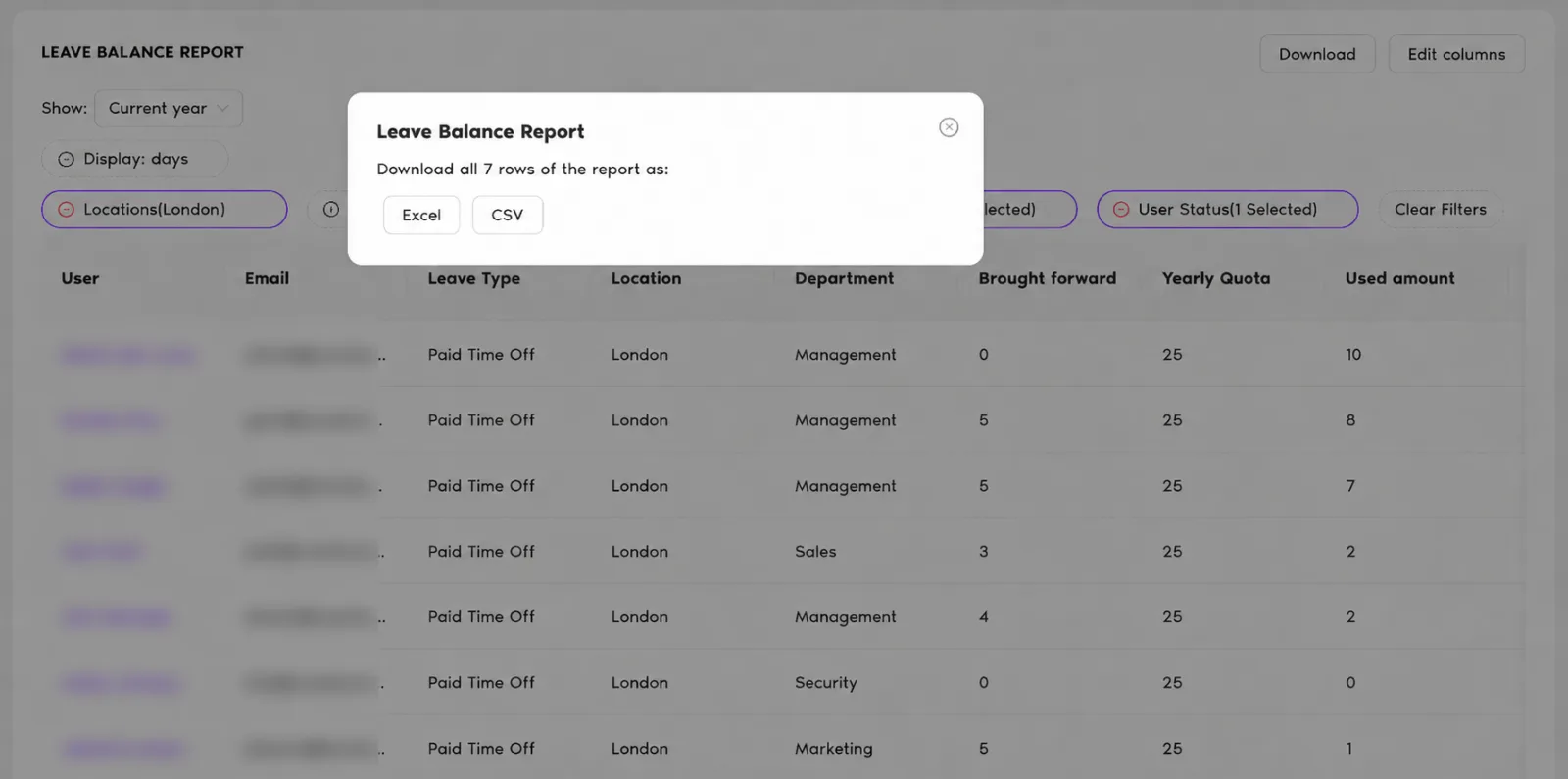
- Export the Leave Balance Report by location for payroll and finance to review PTO liability.
The report shows leave entitled, taken and carried over. Export all offices in one file or separate them by location, depending on how payroll and finance need to review the balances.
Plan for a Smooth Start to the New Year
The Brought Forward Policy is a powerful tool to make leave management easier, but its success depends on careful planning and clear communication. Take the time now to review your settings, align your policies with your goals, and make sure everyone’s hard-earned days off are accounted for.
Switching systems at year-end? Our guide to switching leave tracking systems before January 1 covers moving brought-forward balances. For balance reminders, December requests and Christmas cover, see our year-end PTO guide.
Looking for more details? Check out:
- How Do I Set a Brought Forward Policy?
- Can I Set Expiry Dates for Brought Forward Days?
- How Can I Apply the Brought Forward Policy Retroactively?
- How to enable a brought forward policy, step by step
- PTO rollover rules by US state and country
Because every day off counts, let’s make the most of them!
Manage leave across all your locations
Leave policies and public holidays for every office, state or country, in Microsoft Teams, Slack or Google Workspace.